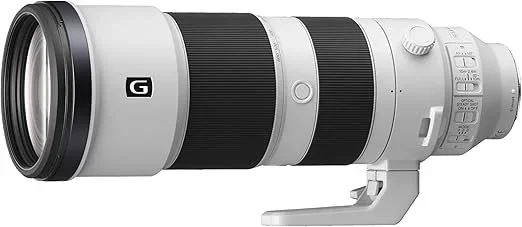
The Sony 200-600mm f/5.6-6.3 G OSS lens is a versatile and high-performance zoom lens designed for Sony E-mount cameras.
Are you a birder? If so, you’ll know all about it already.
Are you a crusty old veteran cameraman who wants to know a little more about this beast? Read on…! Personally, I use it for a lot of my wildlife stock footage, and then try to look for excuses to use it elsewhere, cities, for example, doing people stock footage, that’s great fun.
Check current price on Amazon - Purchasing through this link supports me at no extra cost to you.

This lens is part of Sony’s G-series lineup, indicating that it is a premium lens in terms of build quality, performance, and optics.
The lens was first released in mid-2019 and has received rave reviews from photographers for its impressive image quality, fast and accurate autofocus, and excellent build quality.
I made a video review too, find that here - Sony 200-600mm lens review.
Sony 200-600mm lens review.
Build Quality and Design
The Sony 200-600mm lens has a robust and durable build quality that is ideal for outdoor photography. The robust and durable quality that we’ve come to expect from the Sony G series.
The lens is weather-sealed against dust and moisture, making it suitable for use in challenging conditions. It has been made with an “internal zoom’’ so there’s no dust or water-inducing telescopic action going on here. Brilliant.
The lens also has rubberized focus and zoom rings that are easy to grip, even with gloves on. Perfect for those winter camping trips into the mountains…..?!
It has a relatively large size and weight, which may concern some photographers, especially those who plan to shoot handheld for extended periods, or cart it up huge Welsh mountains. However, the lens has its own tripod mount that can be used to balance the lens on a tripod or monopod, making it easier to use for extended periods.
The physical size of the Sony 200-600mm caught me out a little bit, I wasn’t expecting it to be quite so big. It doesn’t fit in my camera backpack very easily. To do this, I need to strip out all the pockets and dividers and reverse the front hood.
Speaking of which, I’m a big fan of that hood. It sticks out a good few inches and as well as preventing glare and reflection, it does a great job of protecting it from knuckledraggers like me bashing into rocks.
The weight is what you’d expect from a lens this big. At around 2kg, you wouldn’t want it hanging around your neck.
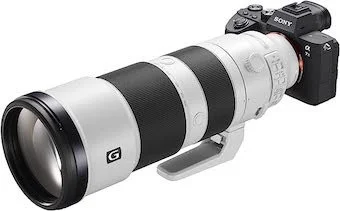
Image Quality
The Sony 200-600mm lens delivers impressive image quality with excellent sharpness, contrast, and colour rendition. It features two extra-low dispersion (ED) elements and one aspherical element that help to minimize chromatic aberration and distortion, resulting in crisp and clear images. The lens also has a maximum aperture of f/5.6-6.3, which is relatively fast for a telephoto lens, allowing for good subject separation and background blur.
There are almost certainly some fancy comparisons that could be made here with Sony’s flagship 600mm F4 GM lens, but that’s outside of the scope of what I’m interested in or qualified to discuss. I’ve not used it, and at around £12,000, I don’t plan to for photography reasons.

The Sony FE 600mm f4 G Master Lens
What I will say is that the 200-600mm is that it is very impressive. On a couple of occasions, I’ve felt like it seemed a bit soft and had to remind myself of the environment I was using it. Shooting mountain summits miles away through thick humid air at 600mm with an APS-C crop.
Bonkers really. Make sure to cut it some slack in those conditions.
Autofocus Performance
One of the most significant advantages of the Sony 200-600mm lens is its fast and accurate autofocus performance. The lens uses Sony’s advanced Direct Drive SSM (Super Sonic Motor) focusing system, which is known for its speed and accuracy. The autofocus system is also very quiet, which is important for wildlife photography, where loud focusing sounds can scare animals away. The lens also has a focus limiter switch that allows you to limit the focusing range, making it easier to focus on a particular distance.

Stabilisation
One of the first things I did with the Sony 200-600mm lens was to take it up into the mountains of Snowdonia. Obviously.
This proved to be a great test of image stabilisation, as some windy weather pushed it to the limits.
That brutal Welsh wind ruined a whole load of shots….
The longer length and diameter of the 200-600mm really catches the wind and even on my Manfrotto 055, it was shaking like a shivering dog.
Amazingly, I salvaged enough shots to make it worthwhile, but I wouldn’t suggest you consider using the Sony 200-600mm lens for landscape photography or video unless you’re as bonkers as I am. The whole experience was a pain in the backside.
Mountains and strong winds aside, the stabilisation is impressive. I can’t fault it really. Couple the 200-600mm with the IBIS of a Sony Alpha for great results.
Taking the Sony 200-600mm lens up into the mountains,
Cost
The Sony 200-600mm lens comes in at around £1600 here on AMAZON.
Does the 200-600mm lens justify the cost? I can’t answer that. For me…? No, not really, TBH, but that’s because I use it so infrequently and I pretty much exclusively shoot video.
I keep it around for a bit of fun, and for me. I always see good full-frame Sony glass as a bit of an investment. It’s likely that this lens will hold its value well into the future.
That’s my justification anyway….!
Compatibility
The Sony 200-600mm lens is compatible with Sony E-mount cameras and can be used with both full-frame and APS-C sensor cameras. The lens is also compatible with Sony’s 1.4x and 2.0x teleconverters, which can extend the focal length up to 840mm or 1200mm, respectively.
Worth noting again here is the APS-C crop mode, when used on an A7iii or similar. The crop mode on the 200-600mm will give you up to a 900mm equivalent, in video mode only, of course, as doing this in photo mode will just cut into your resolution.
Conclusion
Overall, the Sony 200-600mm f/5.6-6.3 G OSS lens is an excellent choice for photographers who need a versatile and high-performance telephoto zoom lens. The lens has a robust and durable build quality, delivers impressive image quality, and has fast and accurate autofocus performance.
It’s a bit heavy and bulky, which can be a concern for some photographers, but the lens's performance and image quality more than make up for its size and weight. If you are looking for a high-quality telephoto zoom lens for Sony E-mount cameras, the Sony 200-600mm lens is undoubtedly worth considering.
For those of us who shoot primarily video, primarily landscape, primarily in the mountains, and primarily in the cold wet winter winds of Wales…. maybe consider something else.
Or keep it around as a very expensive lens to have fun with now and then. How about a bit of street photography???
Street Photography with the Sony 200-600mm lens?
Seriously?
Yes! Why not?
I use “street photography” loosely here because I know the street photography folks get a bit funny about the classical purity of it, but I’m using the 200-600mm to shoot photography, on a street, so it’s “Street photography”, officially. Case closed.
I’ve found it quite fun to take this monster out walking city streets occasionally. It offers something different, something wildly different. Street photography has never really interested me, for lots of reasons, but wandering around with the Sony 200-600mm I found to be pretty cool. Lurking in the shadows, observing from afar, almost like a sniper.
A photography sniper.
Street photography for the introvert.
If you can get past the feeling and look of being a bit creepy, street photography with the Sony 200-600mm lens is worth a go. I’ve taken it out quite a few times and made a couple of videos that show some examples of what’s possible.
Street photography in Birmingham with the Sony 200-600mm lens.
Street photography in Dudley with the Sony 200-600mm lens.
See the 200-600mm in Action (and License the Footage)
Reviewing specs is one thing; seeing the results in a broadcast environment is another. I rely on the Sony 200-600mm to capture shots that require extreme reach without sacrificing sharpness. You can see (and license) the results of this lens in my archive:
Wildlife Authenticity: The reach of this lens allowed me to capture the intimate, unbothered behaviour of Wild Foxes in an English Garden (CP #191) and the detailed textures in my Wildlife Stock Footage collection without disturbing the subjects.
Compression & Scale: I use this lens to compress the perspective in my city work, stacking layers of architecture in York and Cambridge to create a busy, bustling look that wide angles simply miss.
Editorial Detail: During events like Royal Ascot (CP #284), this lens lets me pick out candid human moments from a distance, capturing the real emotion of the crowd.
If you want to see how professional gear translates into professional assets, explore the full 4K Stock Footage Library or read more about my filming techniques on the Stock Footage Blog.
The moon at 1200mm (Sony 200-600mm lens with 2x teleconverter)
Moonrise with a Sony 200-600mm lens and Sony 2x teleconverter on a Sony ZV-E1, full camera settings below. This was moonrise after a hot, humid British summer day. The moon was only at about 2 degrees of elevation over the houses, so there was plenty of thick mucky atmosphere to shoot through; I think it did a great job.
Camera Settings -
4K 25P XAVC S 422 10 bit SLOG-3 with standard Sony LUT
1/50th Shutter at ISO 12800 f13 - Due to the teleconverter, the 200-600mm lens is f6.3 at the long end, the 2x doubles this.
The ZV-E1 2nd native iso is 12800. There's a little noise, but it kept it quite clean.
I accidentally overexposed the moon a little, you'll see on the bottom left, and it highlights that red aberration, which is made worse with the 2x teleconverter, and far more obvious when 200% cropped, but I'm nitpicking now.
The "Sniper" Loadout: Wild Camping with the Sony 200-600mm & ZV-E1
There is an old saying in hiking: "Pack light, freeze at night." Or is it "Pack light, travel far"? I can’t remember, because I usually ignore it.
My philosophy has always been: Pack heavy, get the shot.
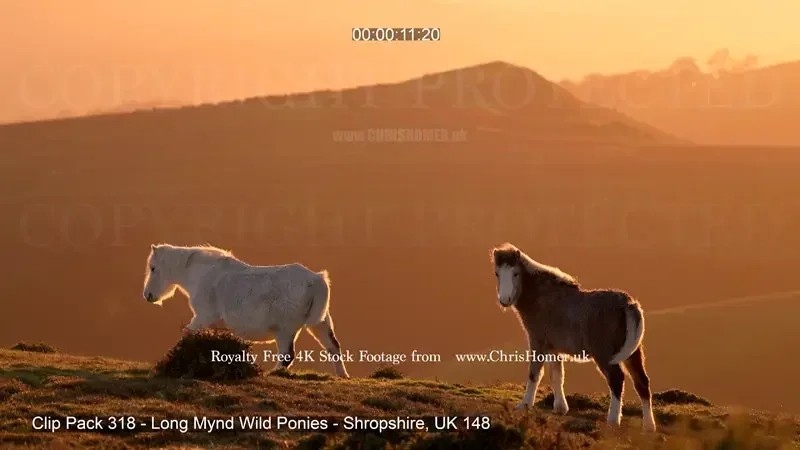
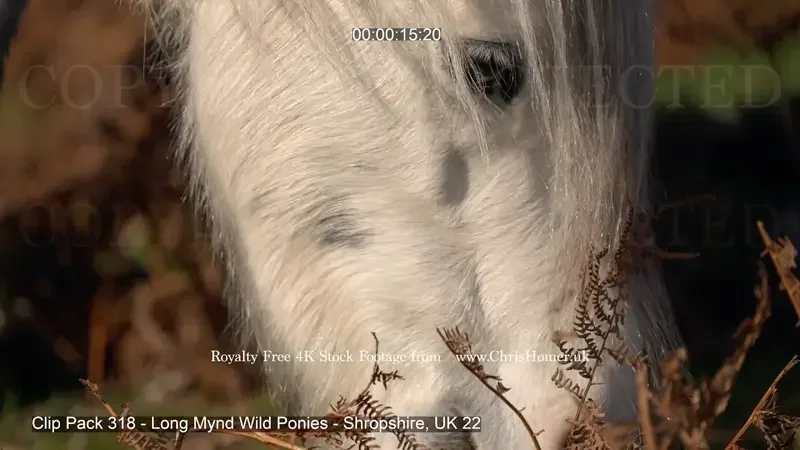
For the latest filming trip, I left the sensible kit at home. I didn't want wide-angle GoPro views of me walking. I wanted compression. I wanted texture. I wanted to capture wild ponies from a postcode away with absolute cinematic clarity.
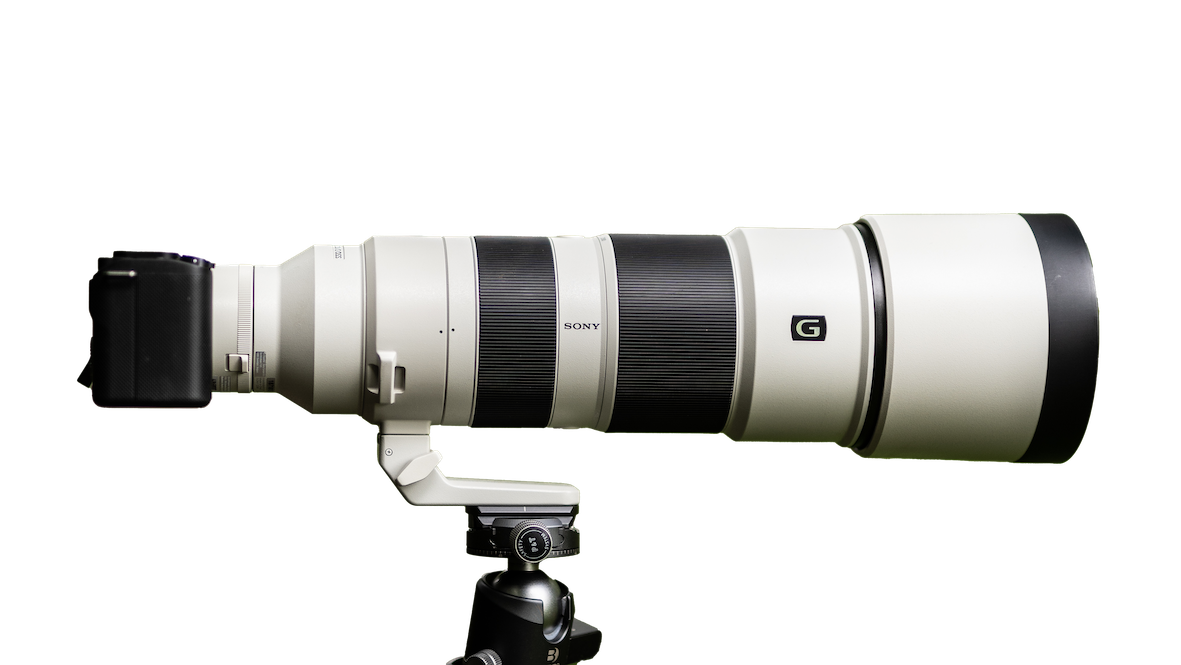
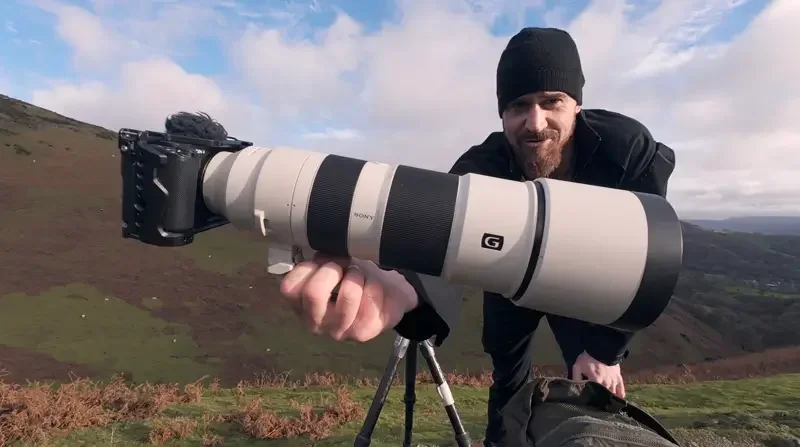
To do that, I turned to a rig that looks frankly ridiculous on the side of a hill: The Sony 200-600mm mounted to the tiny Sony ZV-E1.
Here is a breakdown of the "Sniper" loadout, why I hauled a 100L Bergen up a hill, and why the Benro Tortoise might just be the best tripod ever made.
The Glass: Sony FE 200-600mm f/5.6-6.3 G OSS
Let’s address the elephant in the room (or the pony on the hill). This lens is a beast. It weighs over 2kg. It takes up half my backpack. It is not a "vlogging" lens.
But the results? They are untouchable.
I have used this lens for all sorts of projects. You might remember some of my Sony 200-600mm street photography videos, where I used it to capture candid moments of people from a distance. Or the Digital Distraction film, where the compression turned ordinary street scenes into abstract art.
Why take it wild camping?
Compression and reach: At 600mm, the background is pulled right up to the subject. On the Long Mynd, this meant I could stack the layers of the Shropshire hills behind the ponies. It offers incredible close-up detail, and can turn a landscape into a painting.
The Engine: Sony ZV-E1
I get asked a lot why I pair a massive G-Master lens with a tiny "vlogging" camera.
Ah man, I love this camera. The Sony ZV-E1 is, pound-for-pound, the most powerful camera I own. It has the same sensor as the FX3 and the A7SIII. That means:
Dual Native ISO: incredible low light performance (essential when shooting at f/6.3 on the lens).
4K 100fps: I shot the ponies in S&Q mode. Slowing down a horse's mane blowing in the wind by 4x creates an instant "BBC Earth" feel.
Stabilisation: The Dynamic Active stabilisation, combined with the lens OSS, meant I could actually get some usable handheld shots at 200mm, although the tripod was essential for the long end.
You can see the results of this combo in my Smoke Man Short Film. It’s a cinema camera in a compact body, and when you stick it on the back of the 200-600mm, it’s a weapon.
The Rock: Benro Tortoise 35C Tripod
If you put a 2kg lens on a flimsy travel tripod in 40mph winds, you don't get footage. You get a blurry mess. Or a smashed lens.
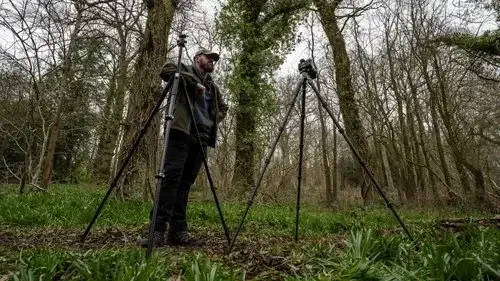
I brought the Benro Tortoise 35C.
I have written before about lightweight tripods, specifically in my K&F Concept Lightweight Tripod Review. That tripod is great for hiking with a standard setup. But for the 200-600mm? You need carbon fibre stiffness.
The Benro Tortoise is unique because it has no centre column.
Stability: Without the column, the spider sits directly on the legs. It is rock solid. In the high winds on the Mynd, it didn't budge.
Low Angles: I could splay the legs and get the camera inches from the ground. This is crucial for wildlife.
Weight-to-Strength: It’s substantial enough to dampen vibrations but light enough (just about) to strap to a pack.
It is, quite simply, the best tripod I own for heavy payloads.
The Mule: Snugpak 100L Bergen
Where do you put a 600mm lens, a tripod, a winter tent, a sleeping bag, stove, food, and clothes?
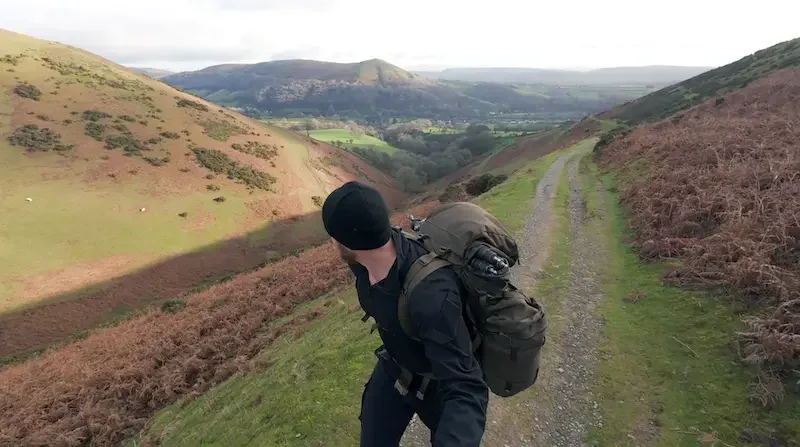
You don't put it in a "camera bag." You put it in a Snugpak 100L Bergen.
This bag feels close to military issue. It is essentially a cavern with straps. It swallows gear.
The Main Compartment: Held the Hilleberg Soulo, my sleeping bag, spare clothes, tripod, and the lens (wrapped in a bin bag!)
The Side Pouches: Food, stove, water, and the ZV-E1 body.
The Comfort: It’s designed to carry heavy loads. Once it’s on your back, the weight distribution is surprisingly good, even if you do look like a fat paratrooper who got lost on the way to the drop zone.
The Shelter: Hilleberg Soulo
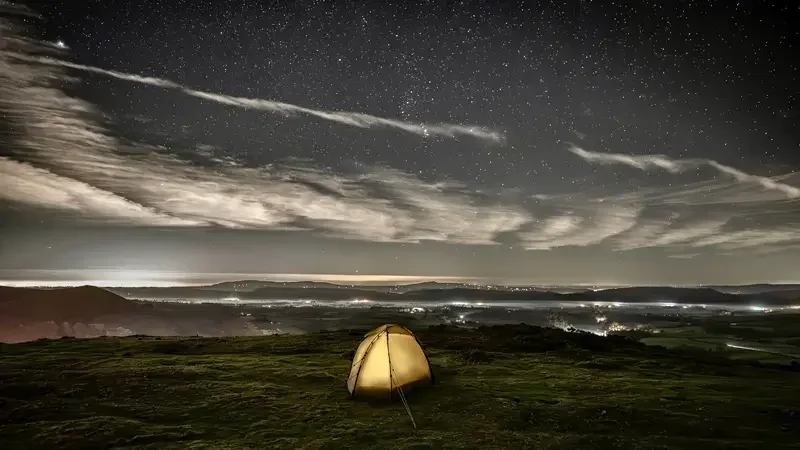
Finally, the home for the night. The Hilleberg Soulo.
This is a 4-season, freestanding solo tent. It is expensive. It is slightly heavier than many ultralight options. But when the wind picked up to 40mph on the exposed hillside, I was glad I had it.
I’ve used this tent in some serious conditions. Check out some of my wild camping blogs.
On this trip, I admittedly made a meal of pitching it (my hands were frozen, and I got the poles mixed up while rushing, check the vlog for a laugh), but once it was up, it was a bunker. It didn't flap. It didn't bow. It just sat there and took the abuse.
The Result: Was the Heavy Gear Worth It?
Hauling 25kg+ up a hill is never fun. But looking at the footage on the monitor makes the back pain vanish.
The Sony 200-600mm captured the ponies in a way a drone or a standard zoom never could.I tend to find I either come away very disappointed or very impressed after using this lens, there’s not much ground in between. The Benro tripod kept it steady. The Hilleberg kept me alive (or at least, dry-ish).
See the results for yourself:
1. The Adventure (The Vlog): Watch me struggle with the gear and the wind in Searching for wild ponies...
2. The Payoff (Cinematic Short): See the 4K slow-motion glory in Wild Camping with my Sony 200-600mm
3. The Files (For Editors): If you want to use this footage in your own projects, I have uploaded the full set (181 clips!) to my library. You can buy them here: Clip Pack 318 - Long Mynd Wild Ponies
Sony 200-600mm Landscape Photography Video
Trying some landscape photography with the Sony 200-600mm lens on a Sony A7iii, yes, landscape photography with a Sony 200-600mm lens. Really.
Unfortunately, stupid ideas are no stranger to my brain, they’re always there. Sometimes talking about camera setups, sometimes about jaffa cake-eating competitions, and sometimes about whether or not a cherry Bakewell sandwich would be better with peanut butter or Nutella. Today though, it was a little less sensible than my cherry bakewell signature dish, but perhaps more tasteful. It was whether or not I could use a Sony 200-600mm lens for landscape photography.
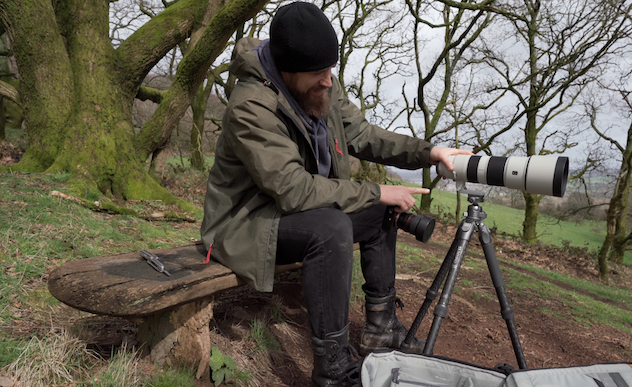
It’s a great lens, I’ve talked about it quite a few times before, but mostly about how useless I find it. I just don’t have a need for it. I don’t shoot sport with it, I don’t shoot wildlife, I’m not a birder, and I definitely don’t have room in my life for a £1500 paperweight. So, having given it a shot at some street photography in the past, and some botched attempts at taking it into the mountains, I thought I’d get out and attempt some landscape photography.
My location of choice was the Clent Hills, my local stomping ground. The wind was up, with 20-30 knot gusts bringing across scattered clouds and sunny intervals. Tricky conditions for taking photographs with a mini-telescope.
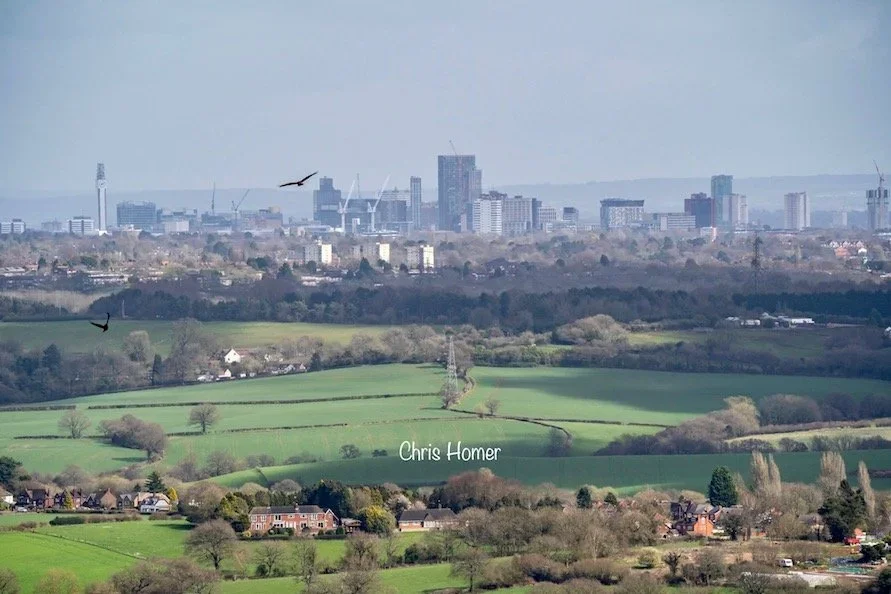
The first shot I captured, rather predictably, was something on the skyline. In this case, Birmingham City centre, getting on for 12 miles away across the West Midlands. I was in a lovely secluded spot, out of the wind, and shot this at over 400mm, I love the way it compresses the foreground and background. That countryside is miles away from Birmingham, a good 6 miles, and the ridge in the background is up near Kingsbury, a good 10 miles behind the city centre itself. Brilliant. Those birds were an added bonus, I caught them at just the right time. I promise you I’m not a birder.
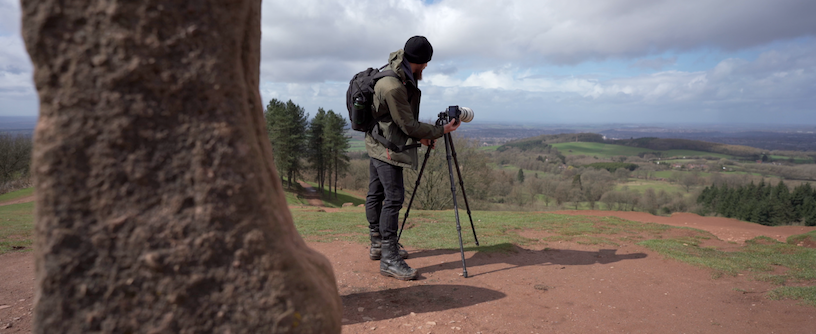
It then got a bit tricky, as I wandered up into the summit gusts and struggled to keep this big beast of a lens stable. The wind really does catch the length of the Sony 200-600mm. Even with the stabilisation on, which is excellent BTW, but a bit like when flying a Cessna, you’ll struggle in a strong crosswind. I wound the ISO up to 1600, went for a 1/2000th shutter speed, and took this shot of the Wychbury Monument, I think those settings are the best way of combating strong winds.
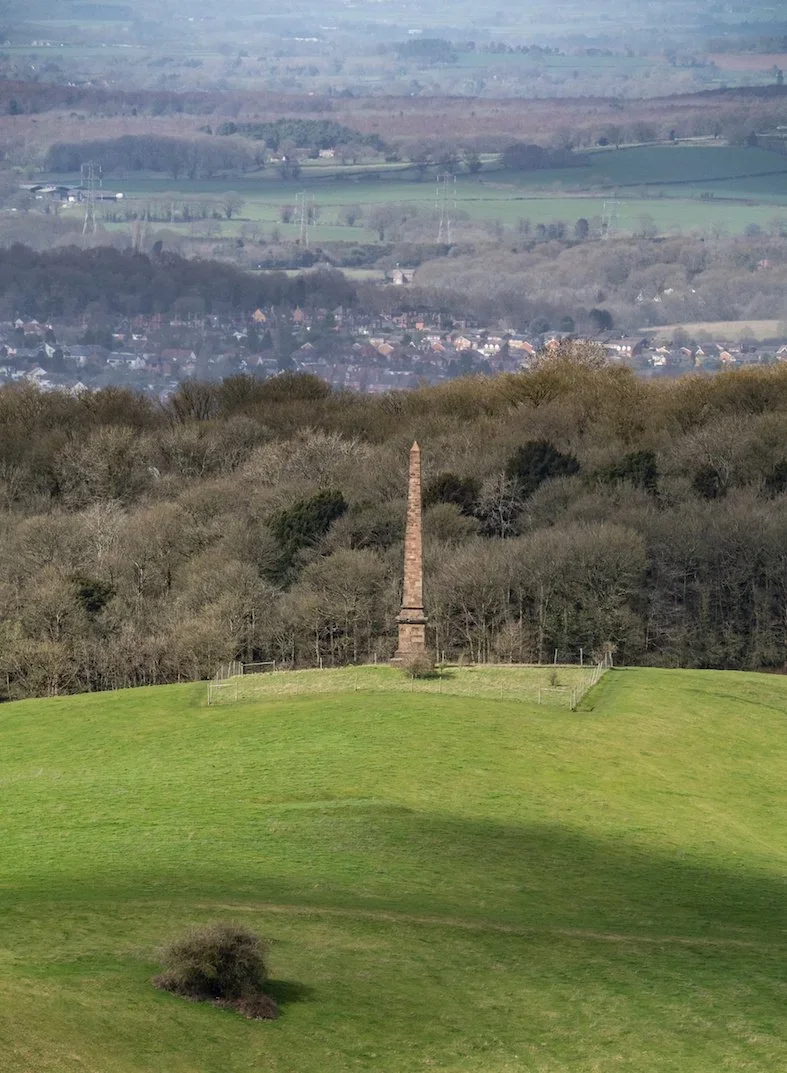
The compression is bonkers, I love it. The Wychbury monument is a good couple of miles away here, and those houses in the background are many more on top of that. Fantastic.
But Who Put Bella in the Wych Elm….?
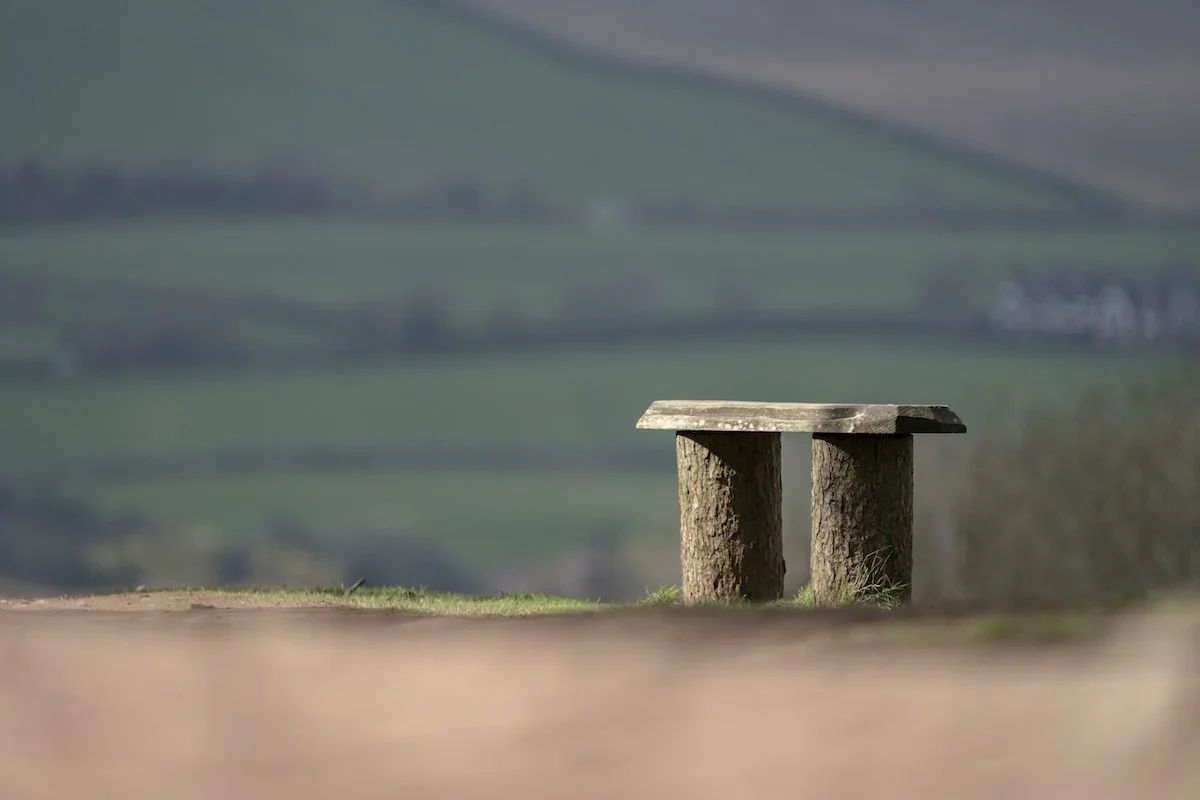
I then knocked off this little shot of a bench. How exciting! It was taken at 600mm with the lens wide open at f6.3, to give you an example of the bokeh that is possible with the Sony 200-600mm. It’s pretty cool bokeh, those fields in the distance are many miles away though, so you’ll have to pick your shots carefully to take advantage of it.
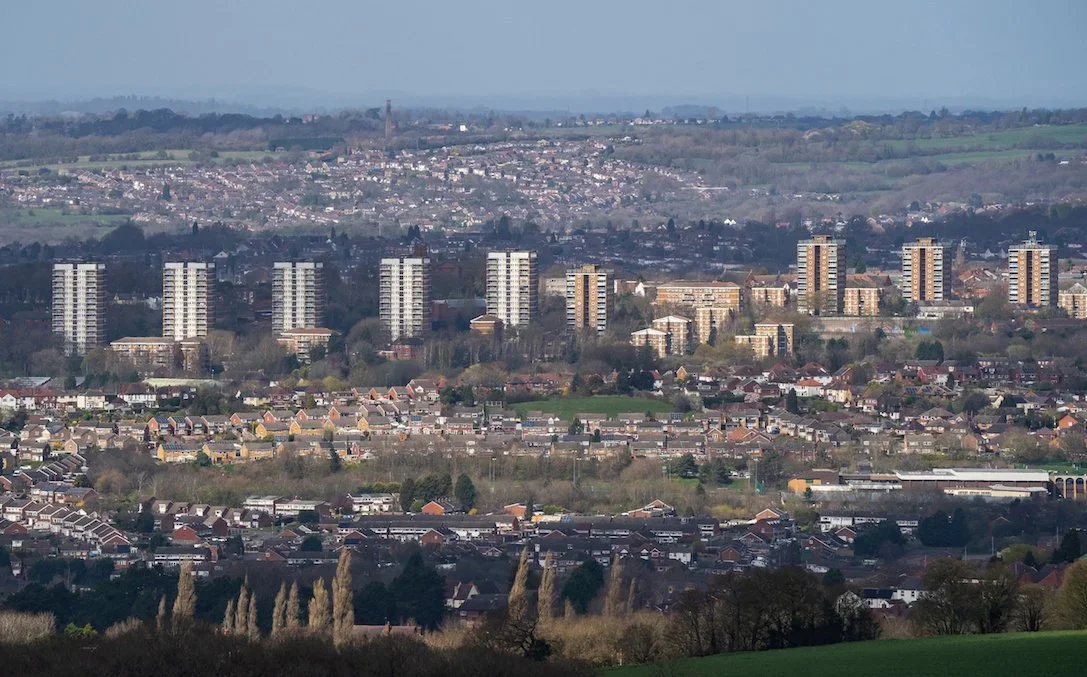
And just when you thought it couldn’t get any more exciting, I found this lovely shot of some tower blocks. This is Brierley Hill flats, an area I know well, from a long long way away. No idea what the tower is in the background, let me know if you know, I’d love to work out the distance.
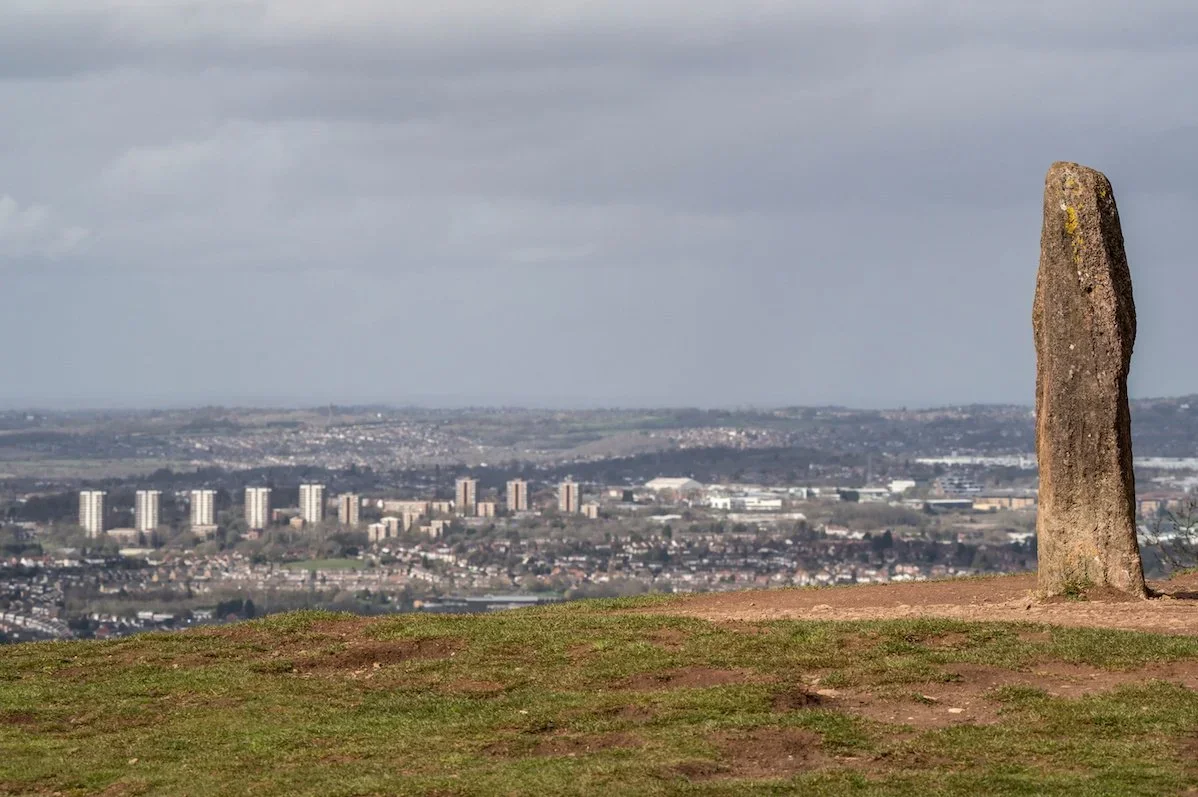
Wait, there’s more. Inspired by the stunningly aesthetic shot of the flats, which is probably the pinnacle of my landscape photography career, I then decided to shoot them again. This time, with one of the Fourstones on the summit of the Clent Hills as the foreground, a bit of a relationship shot, showing one of the stones as it looks out over the town many miles in the distance. It is not possible without a huge zoom, so it was great to use the Sony 200-600mm for this, my favourite shot of the day. Love it. The compression here is subtle, but superb. I’d hope that anyone who has wandered the summit of the Clent Hills would appreciate it. It’s great to have them in the same image.
I then shot a folly, and in the video, talked about how a folly is something that rich people used to spend their money on, before Ferraris existed. That’s the official definition. Honestly.
Today though, I’m changing it…
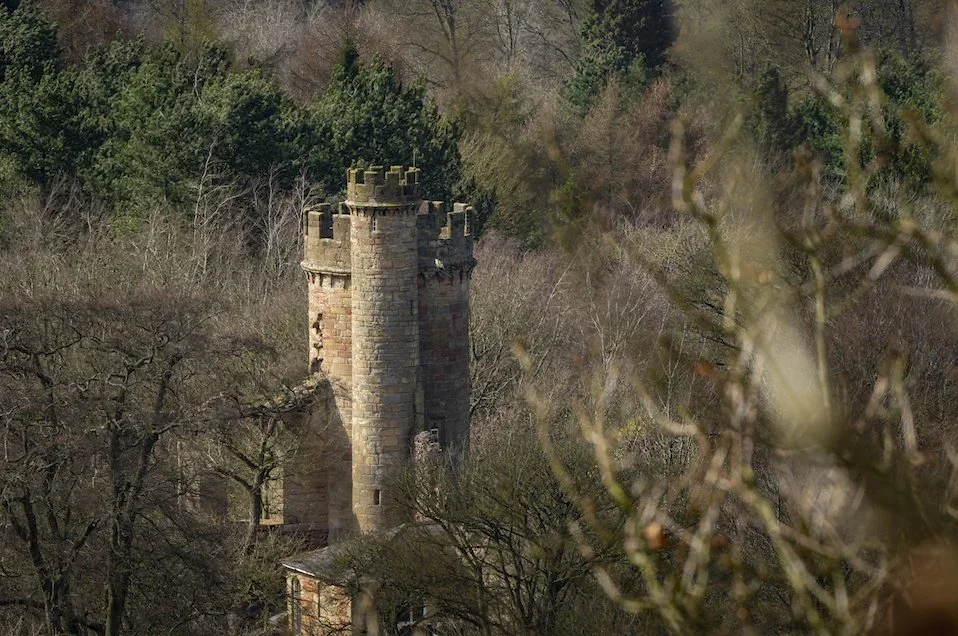
folly /ˈfɒli/ - Noun
1 - Lack of good sense; foolishness:
2 - Something rich people used to spend their money on, before Sony 200-600mm lenses existed.
Sony 200-600mm POV Wildlife Photography Video
Sony 200-600mm POV wildlife photography in Uffmoor Woods with an old Sony A7iii camera. Dull overcast autumn weather, thick messy woodland, strong gloopy mud. Brilliant. A nice relaxing photography walk, with some decent deer encounters.
Sony 200-600mm Lens on AMAZON
Moon at 1800mm | Sony 200-600mm with 2x teleconverter and APS-C mode crop on Sony A7iii
The moon at 1800mm, through a Sony 200-600mm lens, a Sony 2x teleconverter and an old Sony A7iii in APS-C crop mode.
Camera settings - 4K 25P in HLG3 1/50th shutter speed f20 ISO125 4400K
Sony 1200mm Lens Video! (Sony 200-600mm with 2x teleconverter)
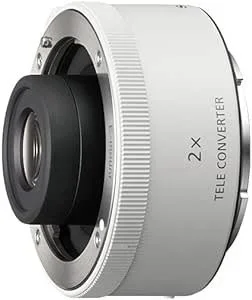
The Sony 2x teleconverter paired with the Sony 200-600mm f/5.6-6.3 G OSS lens is a solid setup for photographers who need extra reach. This combo effectively turns your lens into a 400-1200mm beast, making it perfect for capturing wildlife and sports shots. You will lose some light, with your aperture range dropping to f/11-13, so this combination works best in bright conditions. Autofocus will still work on most modern Sony bodies, but expect it to slow down a bit, especially in lower light. If you’ve seen my latest video, Halesowen Hustle, you’ll get a sense of what this setup can do. The video features test shots at 1200mm, capturing everything from wildlife, ducks, and birds to street scenes and people in the town.
Buy HERE
Using the Sony 2x teleconverter with the Sony 200-600mm lens means you’ll likely need a tripod or monopod because shooting handheld at such long focal lengths can get shaky. The high ISO performance on Sony cameras is pretty good, so don’t be afraid to crank it up to keep your shutter speeds fast. In tricky focusing situations, consider switching to manual focus for better control. The image quality takes a minor hit, but it’s generally still very good, just stop down your aperture a touch to improve sharpness.
Buy HERE
When shooting at 1200mm, as shown in Halesowen Hustle, the Sony 200-600mm lens and Sony 2x teleconverter combo excel at capturing distant details, making it ideal for wildlife photography. The built-in Optical SteadyShot (OSS) helps reduce camera shake, which is crucial at longer focal lengths. However, the already shallow depth of field at 600mm becomes even more pronounced at 1200mm, so focusing becomes more critical.
Make sure your camera body is compatible with both the lens and teleconverter, and you’re good to go. The Sony 200-600mm lens with the Sony 2x teleconverter isn’t for every situation, but when you need that extra reach, it’s hard to beat. Whether you’re photographing birds, wildlife, or distant street scenes, this setup offers impressive versatility and reach, as demonstrated in the video. So, if you’re looking to extend your photographic reach without drastically compromising image quality, give this combination a try.
Moonrise timelapse (Sony 200-600mm lens with Sony 2x teleconverter)
Shot with a Sony 200-600mm lens on the Sony 2x teleconverter on a Sony ZV-E1 camera.
Camera Settings - 4K 25P XAVC S 422 10 bit SLOG-3 with standard Sony LUT 1/50th Shutter at ISO 12800 f13 - Due to the teleconverter, the 200-600mm lens is f6.3 at the long end, the 2x doubles this.
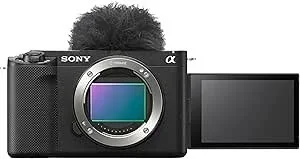
Shot on Sony ZV-E1 Camera AMAZON LINK
More than just birds. A few woodland shots with the Sony 200-600mm lens
I thought I’d head out into my local woods with the Sony 200-600mm lens to see how versatile it could be. Here are a few shots from the video…
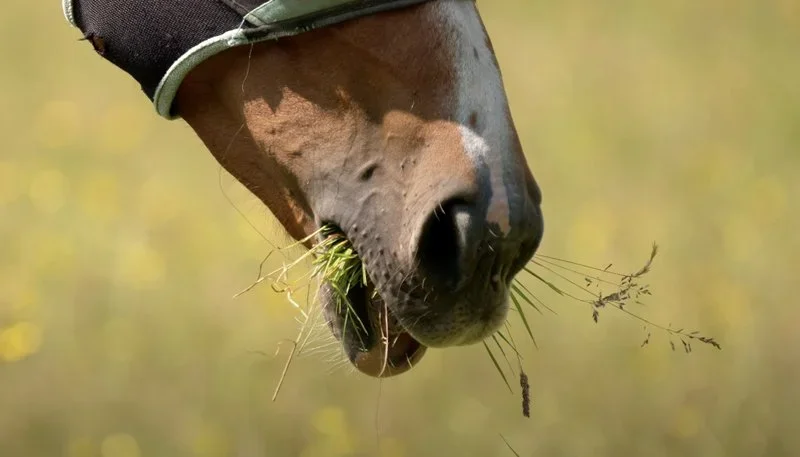
All screengrabs from the video are at the bottom of this page. Shot in XAVC S, 4K 100p slow motion, and played back in 25p. SLOG3 using the standard Sony LUT, on a SONY ZV-E1 camera.
Can you put the Sony 200-600mm lens in a gimbal?
Ridiculous. Absolutely ridiculous. We’re now able to balance the huge Sony 200-600mm lens and A7iii in a lightweight handheld gimbal, the DJI Ronin RS3 Pro. Mental.
Sony 200-600mm lens on a DJI Ronin RS3 Pro Video
Why?
Well, I’m not exactly sure, but after some mucking around at home to prove that it was possible, I went out to do some video testing.
Now, if you wanted to test a small telescope on a 3-axis gimbal, where should you go? Or rather, where should you definitely not go? How about a thick dark woodland on a breezy, dull, overcast day? Roger that. I like a challenge.
Balancing
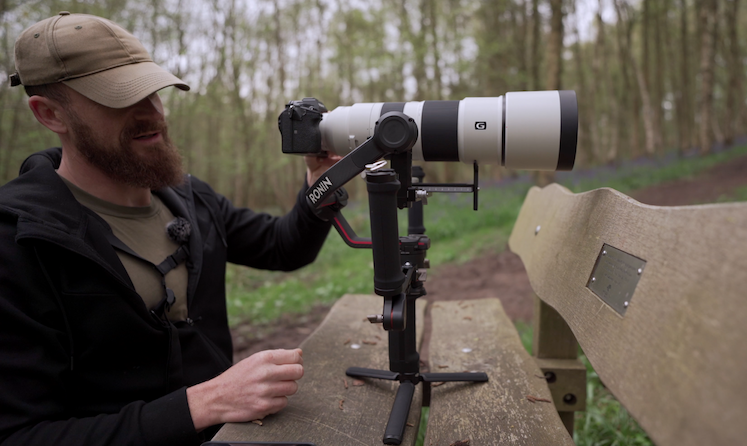
This was surprisingly easy. The Sony 200-600mm lens balances on the DJI Ronin RS3 Pro with ease. I used the long camera plate and two screws to fix the mount of the lens directly to it. I ditched the riser, you won’t be needing that. If anything, the weight of the 200-600mm with a Sony Alpha means it should probably sit a little lower in the arm if it were possible. Perhaps there’s a different lens mount you could use, but maybe that would introduce an extra tilt limitation… anyway, the way I did it works just fine. The standard lens mount fixed directly to the Ronin plate. It’ll give you a bit of a tilt limitation, but that’s easily overcome in the settings, and it’s not like this is a rig that you’re gonna be running around with worrying about hitting the end stops.
There’s plenty of front-to-back adjustment available, and the DJI Ronin RS3 Pro makes this an absolute pleasure, with their new little thumbscrew adjuster. Other gimbal manufacturers take note, all gimbals should come with these easy adjustment screws.
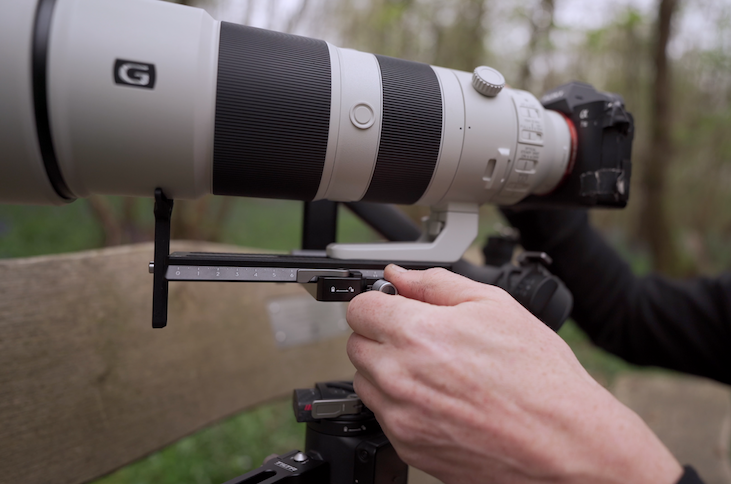
For a good tilt balance, you’ll need the tilt set not only on the horizon, but also looking up and down. This is important. Important, but unfortunately somewhat restricted on this setup due to the length of the Sony 200-600. So you’ll want to do this as best as you can. I lean the tripod over one way, 45 degrees or so, and set it that way, you could wedge the base with something, or get someone to help you, but with a bit of practice, it’s easy enough to do quickly and on your own. Check the horizontal tilt again, and make any fine adjustments with the thumbscrew. That wonderful new thumbscrew.
After that, your roll balance should be pretty straightforward, and then your pan balance too. The RS3 Pro is a monster, it takes the Sony 200-600mm easily. I even tried it at home with the Raveneye and the focus motor attached, it was fine, although I ditched these as I couldn’t see the point in this testing scenario. I’m still trying to find a use for those in general…
Considering I was balancing this on an old wooden bench in the woods, on mud, and wearing wellies, it was a breeze. It took less than 5 minutes, and after turning the gimbal on and heading to the in-built balance checker thingymajigga, it all looked good. Pan and tilt were indicating a spot-on balance, and the roll balance was slightly off, but I went with it anyway.
Calibration
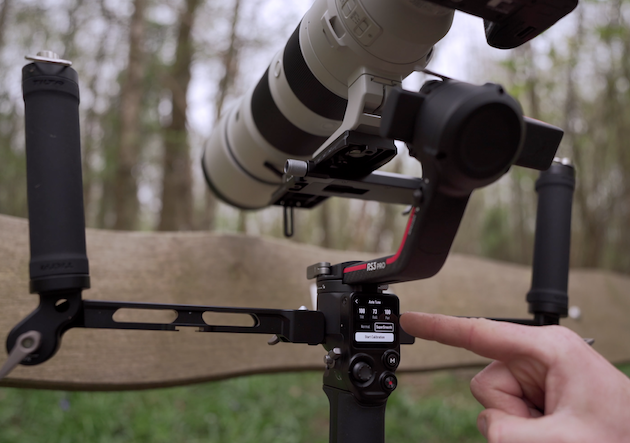
Some prior testing had indicated that it may struggle in “normal” mode, and that I should use “SuperSmooth”. Fine by me, I think it just works a little harder and runs the battery down quicker. Absolutely no problem, I don’t want to be carrying this big heavy thing around for hours on end anyway.
It calibrates ok. I ran through a normal calibration, and then a SuperSmooth calibration. I’ve no idea if you need to do that, but it feels good.
It ramped the pan and tilt stiffness right up to maximum and left the roll a little lower. I think this translates as the Ronin knows it’s a bloody big heavy lens…
Something you may notice with high stiffness values is that you get some vibration on looser mounts, as was the case here. This is common with gimbals, you’ll often see high stiffness values creating some resonating vibration-like movement in the gimbal and mount in certain scenarios. It creates a bit of fibrillation, and fights itself and the “sponginess” of the mount. We see that here in the video, it calibrates fine and then chucks out a warning message of poor control, and you can see and hear the motors having an issue as it fights itself.
Often this is down to the mount not having enough resistance to properly allow the gimbal to do its thing. I’ve seen it on vehicles and aircraft, where a gimbal is working fine while moving, under some wind resistance, and constantly moving around and changing position, but while idling, with a soggy vibration isolator mount, no wind resistance, and nothing significant to do, it gets itself into a hissy fit. Perhaps Mr Gimbal is just bored?
Anyway, you can wind down the stiffness settings, which will often cure it instantly, but then sacrifice some stability later on in the operation. In this case, it was a simple case of the top-heavy gimbal and payload struggling for reference on its flimsy little plastic tripod on a wooden bench. I kept the high-stiffness settings, and simply picked it up to cure it.
Testing
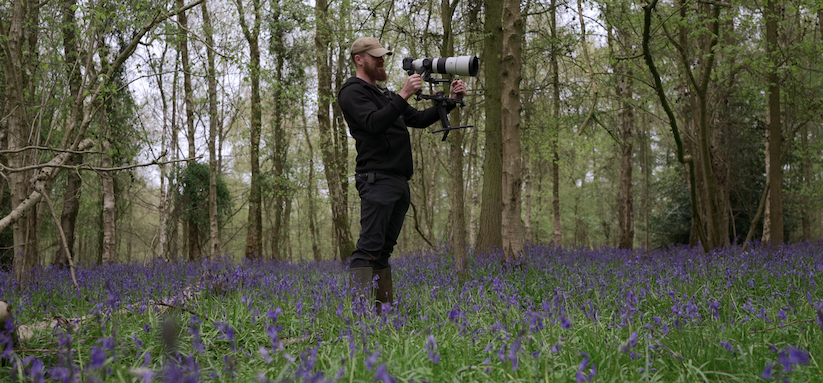
I then spent the next couple of hours walking around the woods with this monstrosity, wondering where I’d gone wrong in life. I’ve spent the last couple of decades working all over the world with gimbals worth up to $1m. Now I’m in wellies, walking through my local woodland trying to avoid trampling the bluebells as I desperately try to find something interesting to include in my YouTube video. It’s a funny old world, isn’t it?
It wasn’t great, and I blamed the wellies, I blamed the weather, and I blamed the location, but it was mostly down to me TBH. I’m not a handheld gimbal guy, my gimbals are usually attached to cars, blimps, helicopters, drones, wires and boats, but I tried, and it was fun. More importantly, it works. The Sony 200-600mm lens does balance and work just fine on the DJI RS3 Pro gimbal.
Managing the weight
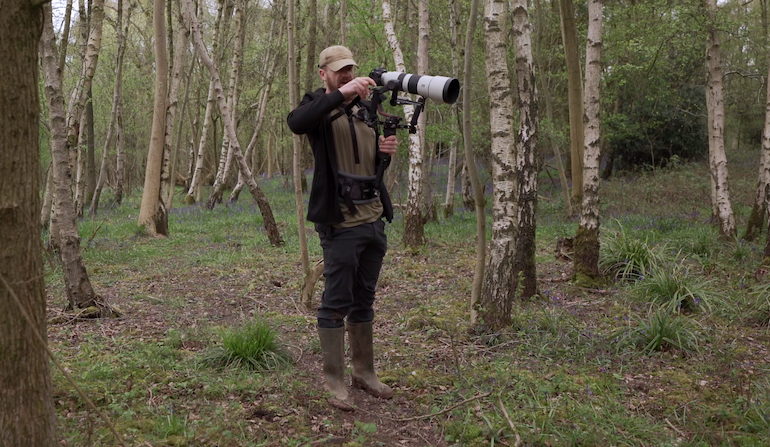
To like to manage my weight I use a strict method that includes copious amounts of steak and deadlifts.
To manage the weight of this rig, I used a TILTA lightweight dual-handle gimbal support system. It comes with a heavy-duty belt and choice of receptacles for the Ronin RS3, and a lighter-weight chest harness with elasticated straps that attach to the dual-handle system. These dual handles mount to the sides of the RS3 Pro perfectly.
I chose this as it’s lightweight and discreet. It slips under a zipped jacket for when you don’t want to be noticed, and it helps avoid looking like a complete goon in the street. It’s quick and easy to engage and disengage from the receptacle, and from the quick-release elasticated straps. When engaged, it reduces a lot of the weight in your arms, by sticking it very much on your hips.
It’s comfortable, and I think the handles alone are worth having. I prefer these to the DJI briefcase handle, or any ring you could put it in for most places I’ll find myself operating.
You’ll find it here - TILTA Dual Handle Gimbal Support
The DJI Ronin RS3 Pro with a Sony A7iii and Sony 200-600mm lens is giant. It easily justifies something more substantial than the TILTA, or even an overhead Easyrig type deal, I’ve seen these used for a lot less, but I like the discreet nature of the TILTA for what I do, and it supplements the deadlifts nicely.
Test Footage
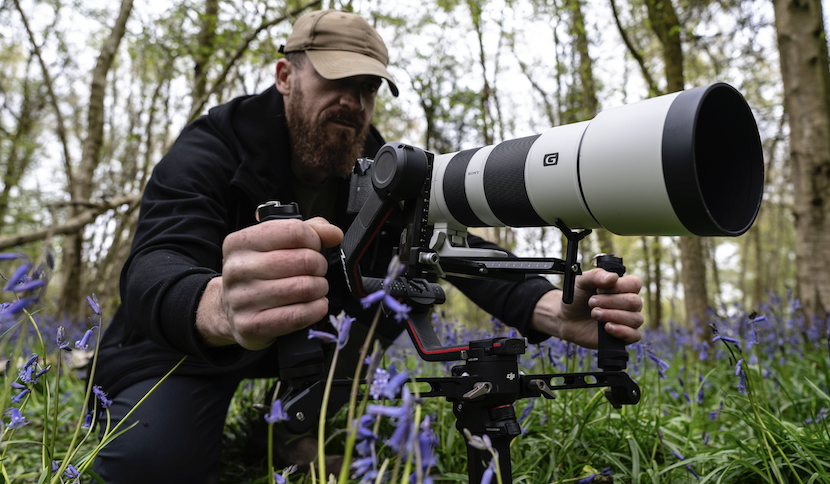
I don’t want to sing and dance about this just yet. The test footage was a little… meh. Uninspiring.
Unsure if it was the dull dark woodland or the gorilla in the wellies, but it wasn’t the payload. The Sony 200-600mm in the RS3 Pro was much better than I expected it could be. It’s remarkable how far gimbals have come. We’re now at the point where you can stick this behemoth 600mm lens in a lightweight handheld gimbal and get “SuperSmooth” footage. And what’s more, you can stick a 1.5x crop on it using APS-C mode and achieve 900mm!!!
You’ll see a few shots at the end of the video that were at 900mm. The horse, the deer, and the bluebell shot at 11:17, you’ll see the one I mean, and many of the other shots were at 600mm. It’s impressive, even if my operating wasn’t.
What will be cool is to put it to the test somewhere better, a busy city centre for example. That’'ll be awesome, maybe I’ll do that next.