I must admit, I’m not the biggest fan of the Peak District. I’m not sure why; it’s beautiful, it’s just that…. well, I don’t know. I can’t explain. Something about the business, the tourist traps, the low-flying aircraft from Manchester Airport. It just doesn’t do it for me.
Don’t let me put you off, though; I’ve got many fond memories and have tried to capture it below in these stories, as well as in my footage, like this reel ANCIENT UPLANDS; it does look stunning. Maybe I just need to try harder?
Kinder Scout Wild Camping, above Manchester!
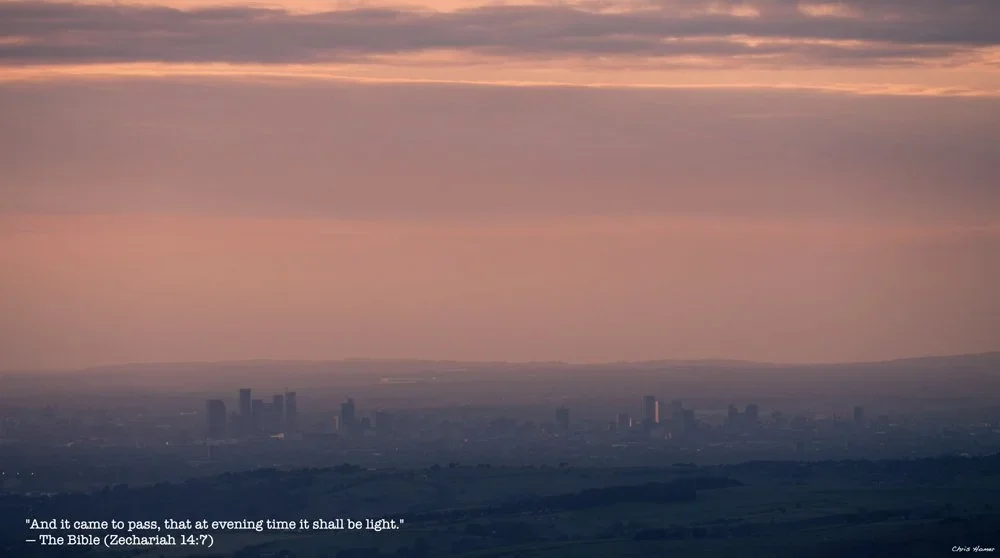
It was time for another couple of days of Peak District wild camping. An ambitious, deeply challenging filming project born from a single, compelling idea that came to me last week, to capture the relentless, electric pulse of Greater Manchester from the pristine, high-altitude solitude of the Peak District. The vision was to create a piece of Manchester timelapse stock footage that was not just good, but outstanding—bridging the ancient British Peak District wilderness with the vibrant, modern urban energy some 25 miles away.
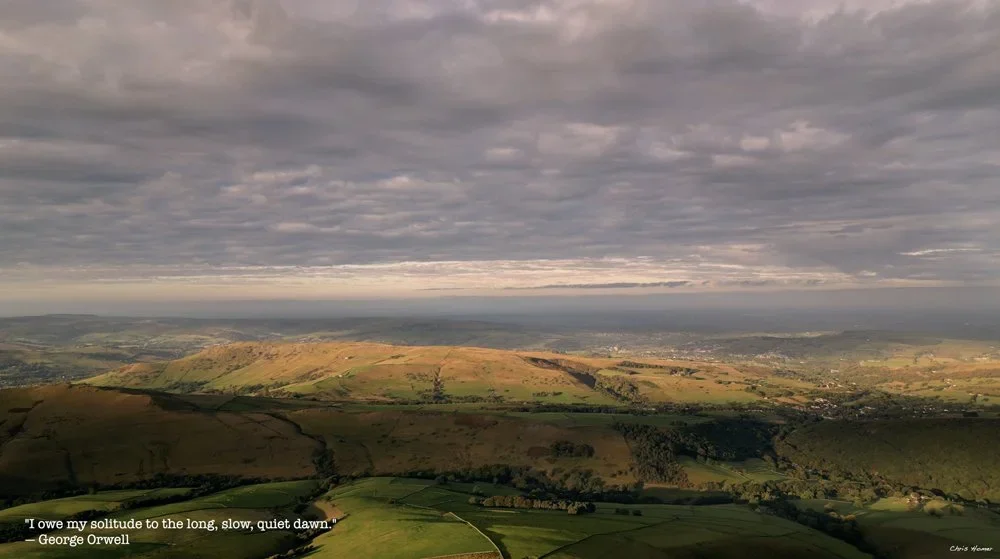
Here’s how it unfolded, from the heavy-footed ascent to the delicate, overnight technical shoot on Kinder Low, and then the final result: a collection of cinematic clips now available for licensing and ready to elevate high-end productions globally.
Watch the YouTube video - Wild camping above Manchester
The Bonkers Vision: A 25-Mile High-Wire Act
The scouted location, perched just under 600 metres on the Kinder Low ridge of the Kinder Scout plateau, provided the perfect geographic advantage: an unbroken, 25-mile line of sight across the mid-English landscape to the iconic skyscrapers of Manchester City Centre.
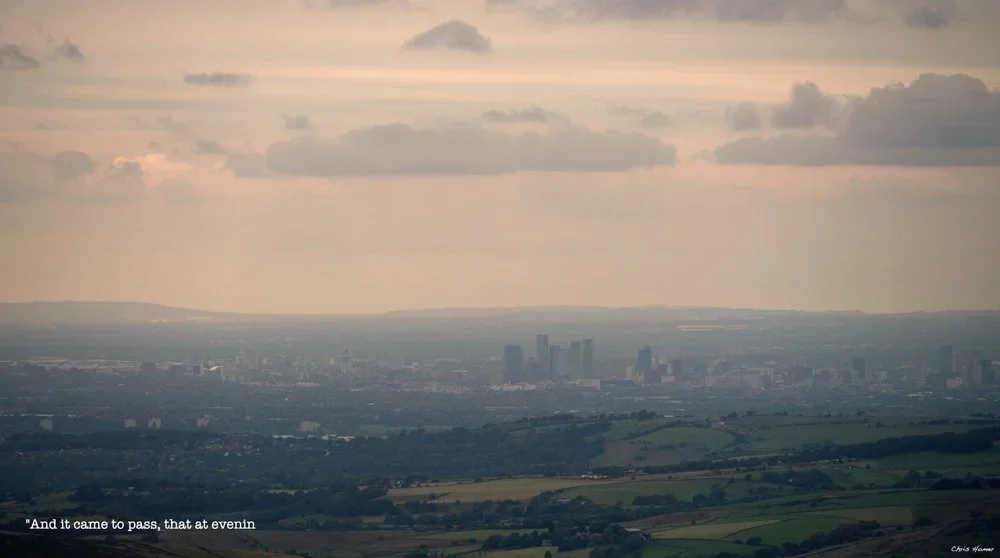
Shooting a long-distance, day-to-night timelapse is a technical high-wire act. The challenges are formidable, far outweighing those of a typical landscape shoot:
Atmospheric Haze: The 25 miles of atmosphere creates dense layers of dust and moisture that severely degrade image clarity. Success relies on a decent air-mass—often a cold, clean front—to achieve the necessary excellent visibility.
Light Pollution: The massive light spill from the city completely obliterates the night sky. The challenge becomes managing the exposure ramp-up not for stars, but for the complex contrast between the darkness of the foreground and the extreme brightness of the city.
Vibration at Long Focal Lengths: At 600 metres, despite the lack of major foreground, wind is a constant threat. For the long-lens shots, any wind over a few knots translates to visible, destructive jitter. The requirement for flat calm winds was a high priority, and securing this meteorological anomaly at that height felt like the biggest gamble of all.
The Ascent: Every Ounce of a 25kg Burden
The trip began at the historic village of Hayfield, starting with a gentle two-to-three-mile walk through classic northern farmland before hitting the unforgiving, steep incline that climbs to the Kinder Low End. Gaining a few hundred metres of elevation is always a physical test, but doing it while carrying roughly 25 kilos of camera gear turns it into something a bit different. It’s all good fun.
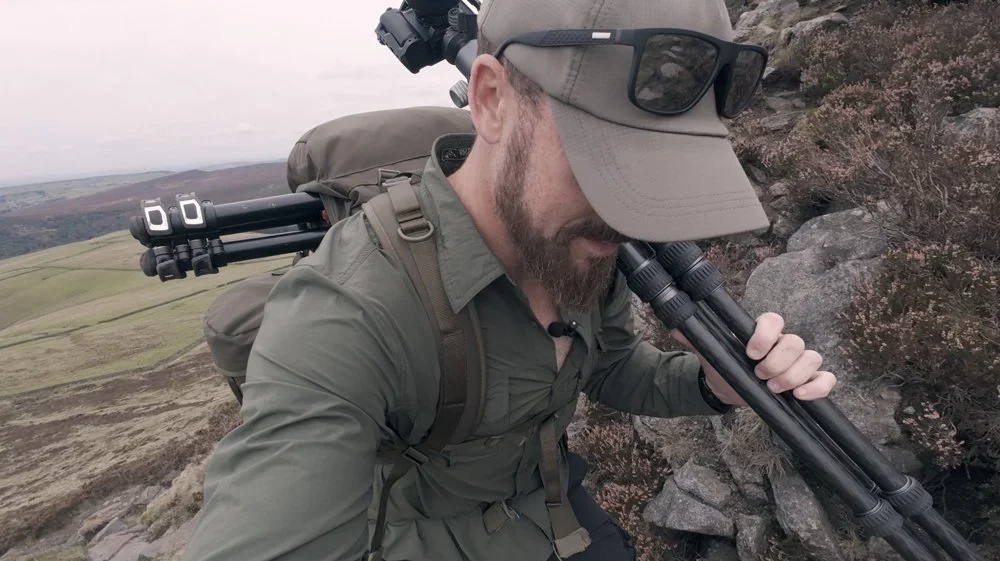
My heavy-duty Bergen (Bergen - https://amzn.to/427uYw5) was heavy, but not quite the heaviest it has ever been, still plenty of room for more. The load included not only my shelter, the light, but reliable MSR Elixir 1 Tent (MSR Elixir 1 Tent - https://amzn.to/46A6cpB), but also multiple cameras, tripods, and vital battery banks to power the timelapse sequences for over ten hours, plus peanut butter sandwiches.
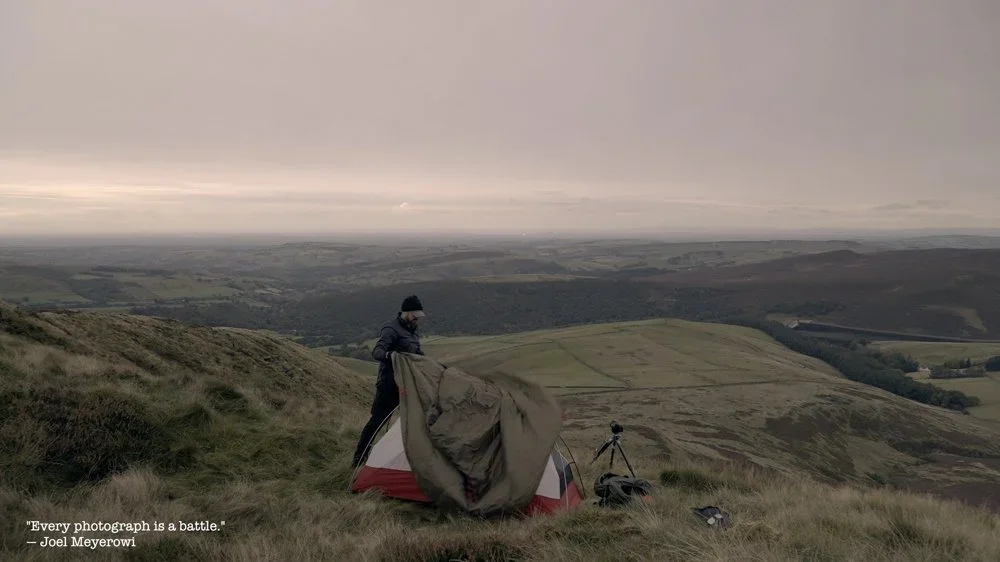
The initial weather was disheartening: a "grey gloomy miserable murky Manchester mess" under a thick blanket of stratus overcast cloud. As I muscled the 25kg pack up the final steep ascent, the visibility was poor. It highlighted the sheer effort required—the raw, human investment—behind every single frame of the resulting footage.
The Technical Anchor: Securing the Shot at 600m
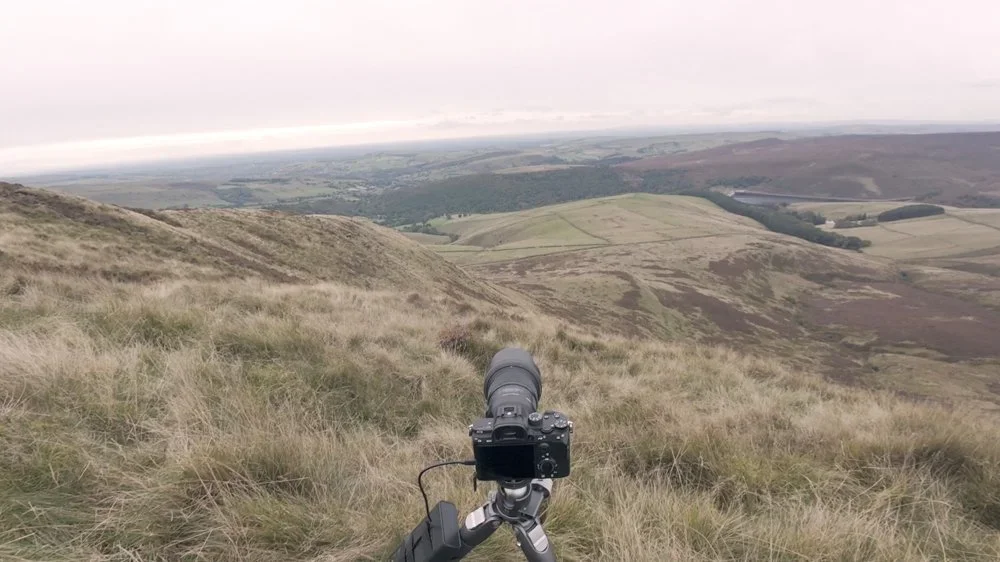
Reaching the camp spot at just under 600 metres, the first priority was establishing the main timelapse camera position. The most critical factor was already in our favour: a blessed absence of wind. It was near flat calm, an eerie quiet that was the green light to crack on.
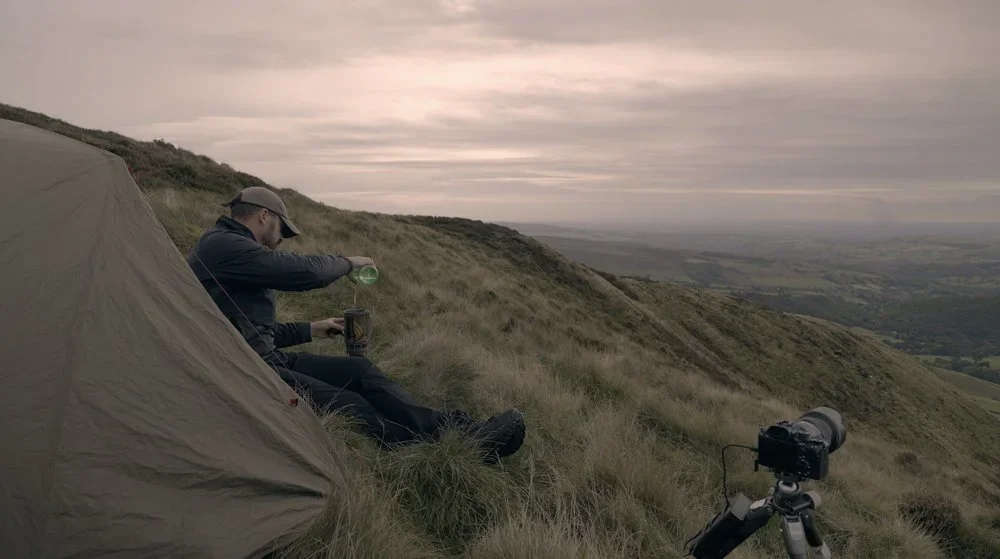
I ended up deploying all the available cameras, each with a specific role:
The Cinematic Wide-Angle Sequence: The primary timelapse setup utilised the Sony A7iii camera (Timelapse camera - https://amzn.to/4mBQ39o) locked down on a Benro 35C Tripod tripod. The lens of choice was the 50mm f1.4 lens (The 50mm Lens - https://amzn.to/46MClKH). This focal length provided the perfect sense of scale, contrasting the immediate Peak District foreground with the miniature, distant urban sprawl.
The High-Risk Tight-Frame Sequence: The most ambitious element was the close-up shot of the city skyline. Just before the "superb" sunset hit, the light on the skyscrapers became dramatic. This was the moment for the high-magnification sequence. I used the versatile 24-240mm lens (The 24-240mm Lens - https://amzn.to/4o2Ftt3), pushed to its maximum 240mm, on a secondary body. This "bonkers" long-lens approach required meticulous attention; any slight tremor or movement would be amplified 240 times over those 25 miles, turning the footage into unusable jitter. The sheer difficulty of securing this bonkers in and of itself, but the wide, and then also the tight perspective is what sets this footage apart.
The Mountain's Solitude and the City's Pulse
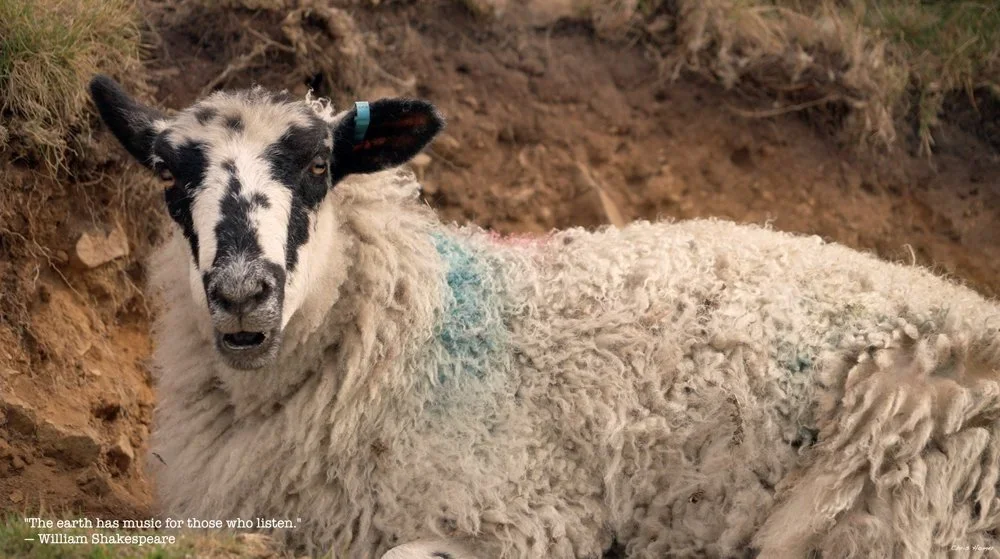
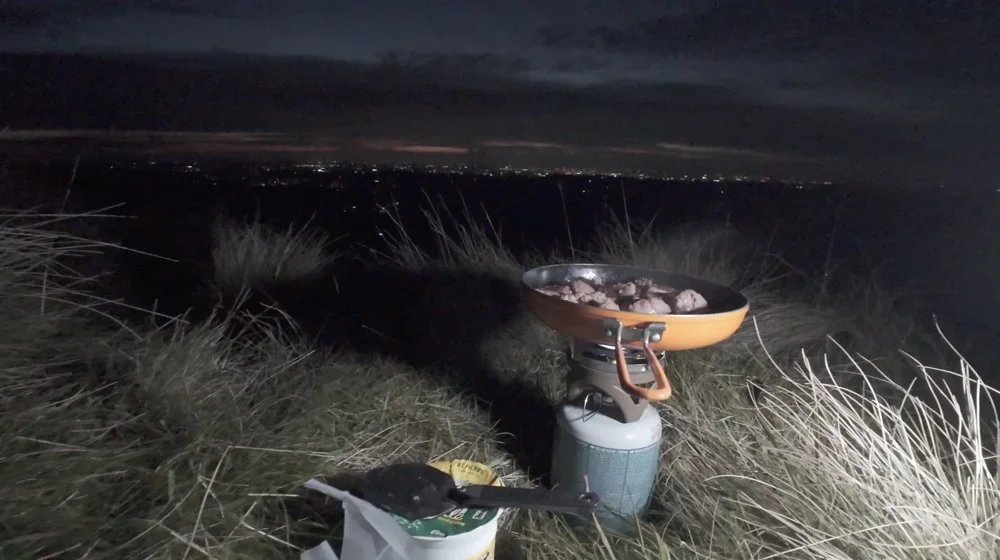
As the time-lapse sequences began, the world became a study in contrasts. The spectacular, colourful sunset transitioned into a quiet, cold night. The mountains were silent, save for the distant bleating of sheep and the low, industrial hum of air traffic. As aircraft descended into Manchester, they became audible over the Peak District, a constant acoustic reminder of the chaos unfolding 25 miles away.
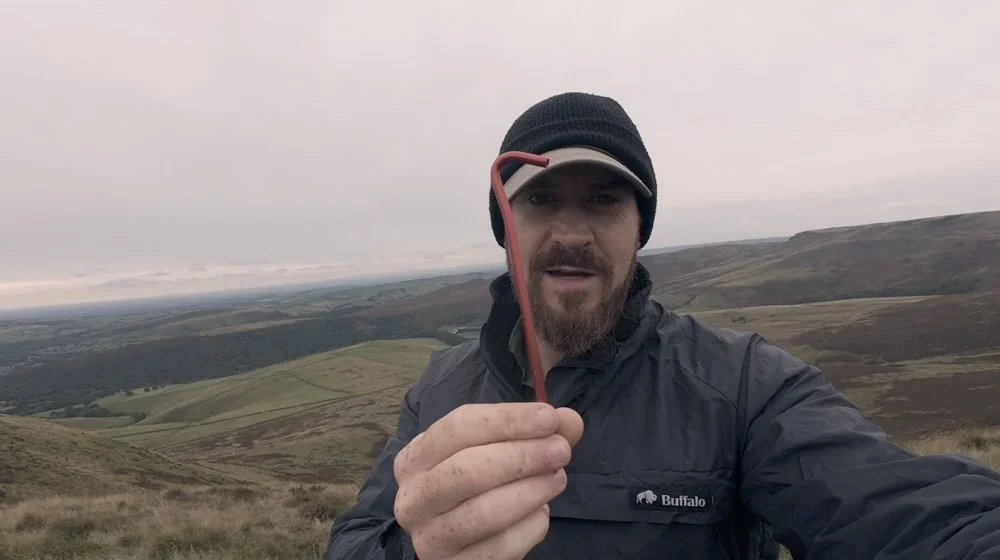
This is the profound emotional core of wild camping overlooking a city. You are in a place of deep, ancient solitude, yet you are the privileged observer of a massive urban engine in the distance. As the mountains darkened and surrendered to the night, the city below was doing the opposite, erupting into a glittering network of headlights, streetlights, and domestic illumination. I found peace by my tent, having an eclectic Chris Homer dinner: chicken and mushroom pot noodle, served over meatballs, and finished with a hefty blanket of out-of-date grated cheese. It was an outdoor meal enjoyed with one of the best—and perhaps most unique—views in the UK. I even found a lightweight red aluminium MSR tent peg on the way up, a tiny piece of good fortune to complement the huge technical luck of the calm wind.
If you’ve lost an MSR tent peg on while wild camping in the Peak District, contact me here and I’ll return it Chris.Homer@Ilovemeatballsandnoodlesandyouredefinitleynotgettingyourpegback.com
The Dawn: Chasing the Cloud and Cinematic Post-Production
After a cold, calm night, the payoff arrived with the sunrise. Although the night sky remained clouded over, the dawn light brought some remarkable colours, and, even better, some low misty atmospherics. As the sun hit the valleys below, the temperature differential caused low-hanging fog and mist to lift and drift up the hillsides in batches, creating beautiful, ephemeral puffs of cloud.
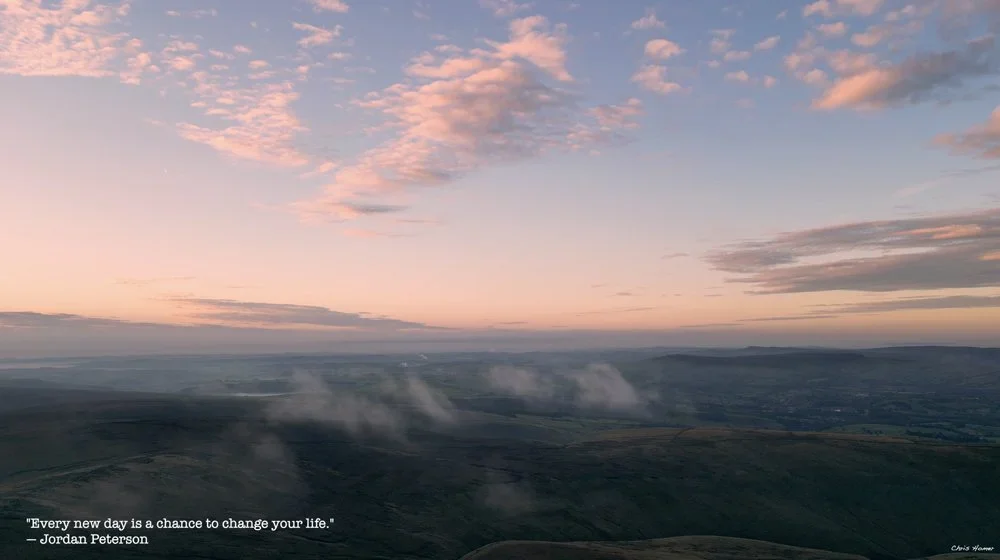
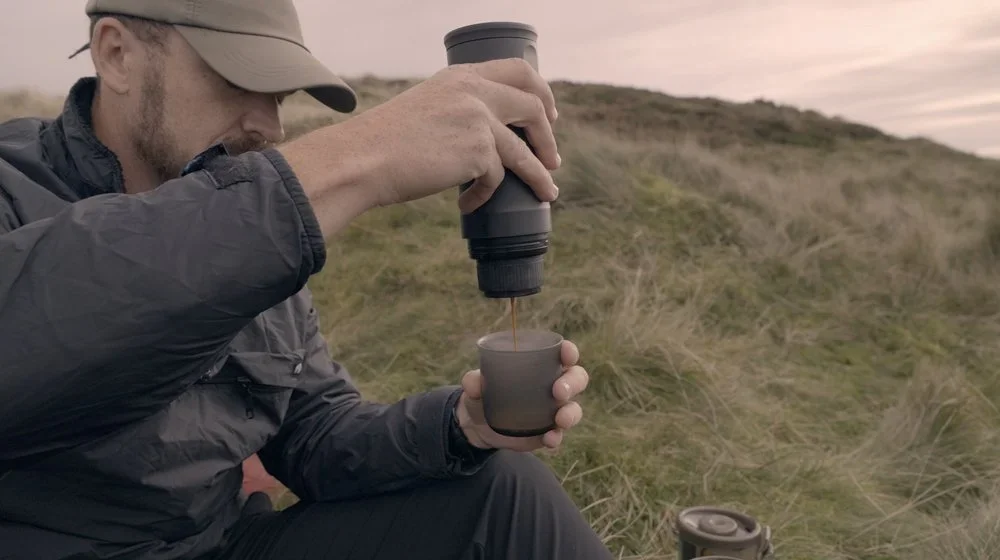
This was the cue for the drone. I quickly launched it (Drone - https://amzn.to/4gB19de) for a game of 'Chase the Cloud', capturing sweeping aerial views of the mist and the sunlight striking the ground. The morning was sealed with the essential coffee ritual, courtesy of the OutIn Nano Portable Espresso Maker (OutIn Nano Portable Espresso Maker - https://amzn.to/46NNkUa), providing warmth before the pack-down.
Need some Peak District wild camping inspiration?
Here’s a short film that I made up there, it’s called “Ancient Uplands”, it’s sensational. If I may be so bold.
Peak District Wild Camping: Finally Capturing a Sublime Sunrise Over Edale
I went back to the Peak District with a mission: to burn out a rain-soaked, frustrating five-year-old Peak District wild camping memory, and replace it with a cinematic time-lapse worthy of the UK’s incredible upland landscapes.
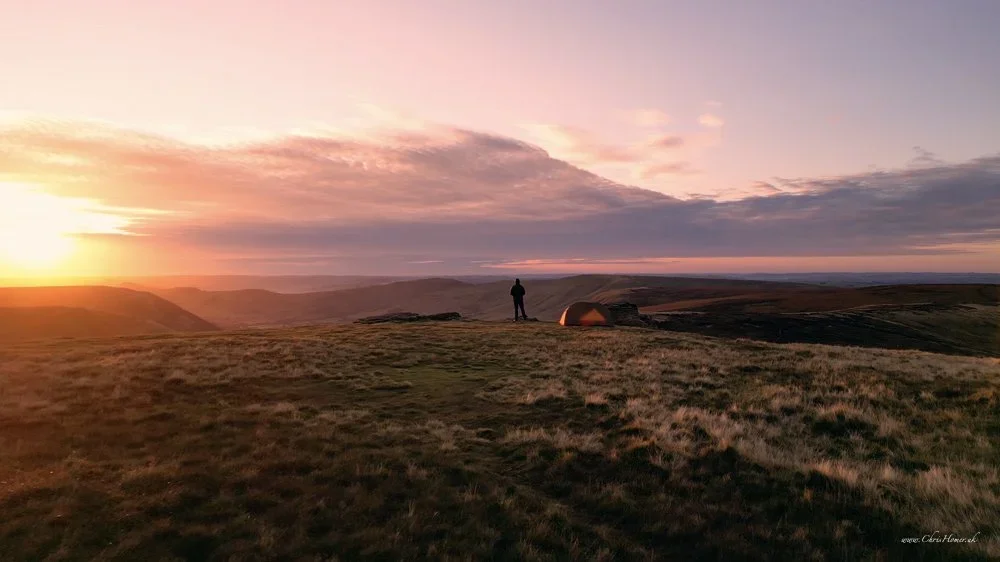
My first attempt at wild camping on the slopes of Kinder Scout was a total washout. 5 Years ago, creating a YouTube video titled DELUGE | 2 Day hike and wild camp in the Peak District, it was biblical. Torrential rain, all afternoon, all night, and all morning. All I saw was the inside of a cloud. Honestly, it was erm, let’s say - character-building, but as a professional trying to capture cinematic stock footage, it was a failure.
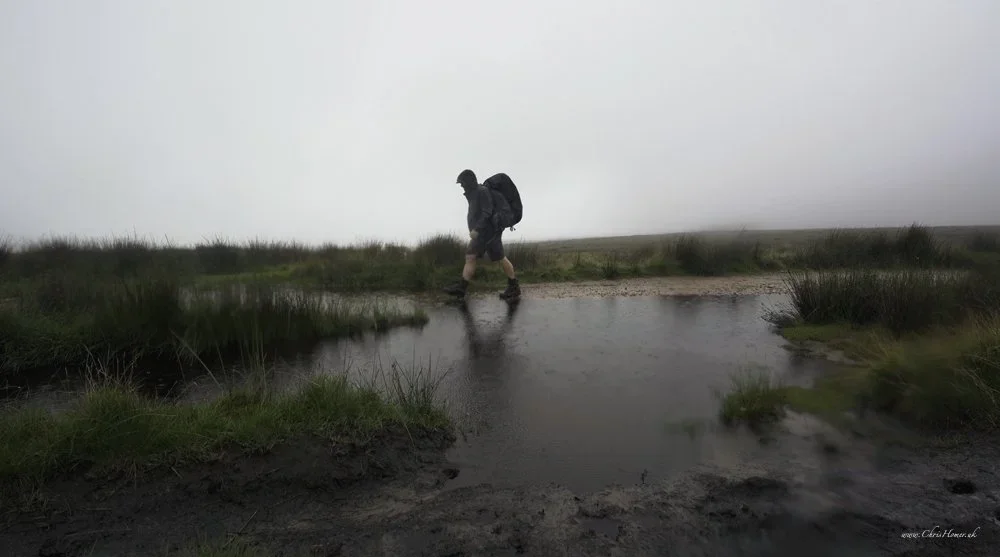
So, this time, this trip was always about more than just a hike and a wild camp. It was a pilgrimage back to the site of that original defeat, carrying a much heavier bergen, with a much better weather forecast—and much higher expectations.
Watch the YouTube video
The Ascent: Hunting the Edge of Edale Valley
I set off near Hayfield on the western side of the Peak District, having driven up the M6 to get there. The forecast was spot-on, promising a clear, cold sector with a light northerly breeze. Crucially, the weather models looked like they had a small possibility of an inversion—and at least, a moderate possibility of that elusive layer of lowline mist hanging in the valleys first thing in the morning. That was the prize.
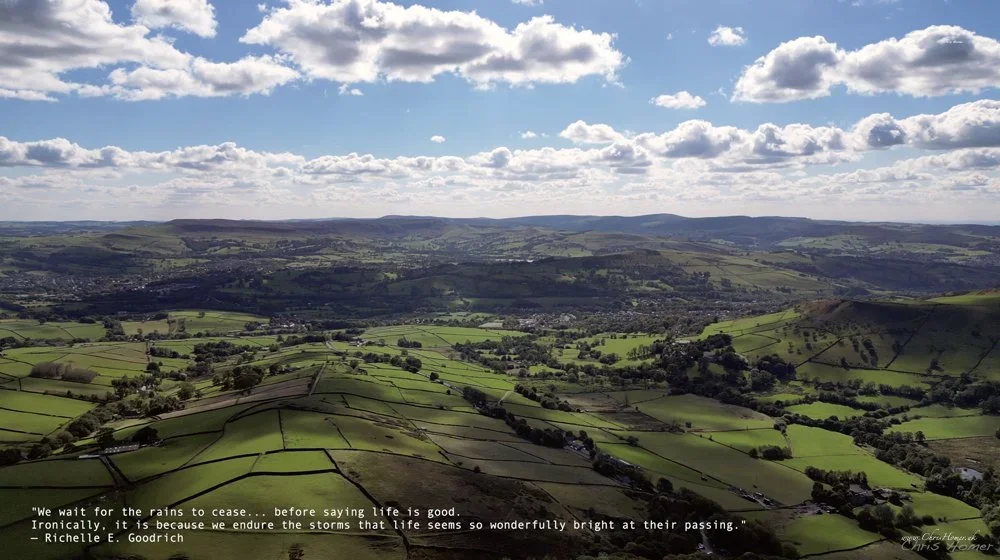
My route was designed for photography, not just hiking speed. I parked near Hayfield and started walking up towards Kinder Scout, hugging the southern side toward Woollpacks and Swine's Back.
At the two-hour mark, I hit South Head and took a moment to appreciate the view. This is where the long miles start to pay off. The day's route was a little extended; I’m working on my fitness, so I walked south around the back of Mount Famine, east toward Jacob's Ladder, and finally up onto Swine's Back. It was nice to find quieter paths of South Head after the initial stretch; I'm used to the relative solitude of Snowdonia and Shropshire, so the peace was welcome.
The 26.8 Kilo Dilemma: Edale vs. Manchester
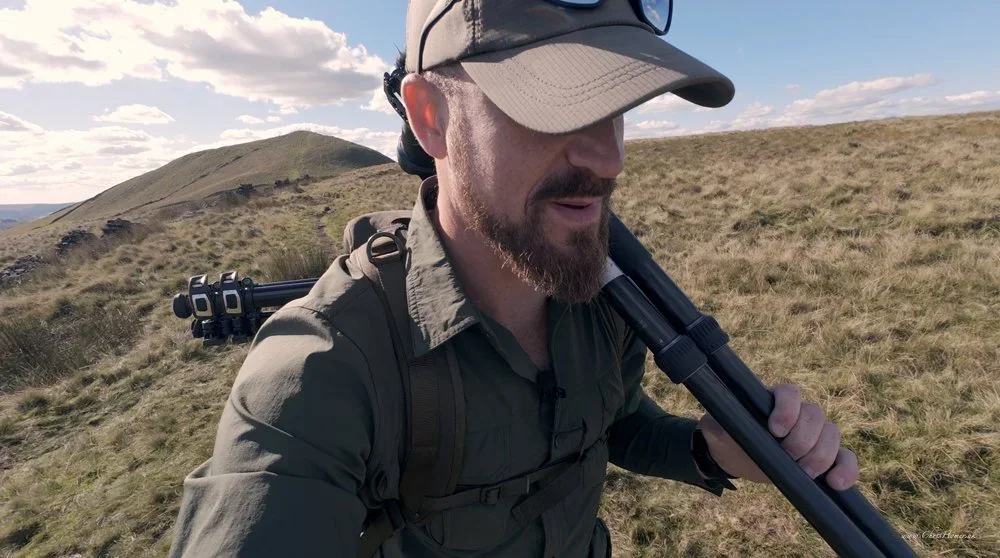
About five miles in, the true cost of chasing cinematic shots set in. That Bergen pack was heavy—26.8 kilos digging into my shoulders. Much of the weight came from all the camera gear needed to pull off my time-lapses:
My Main Camera: Sony ZV-E1 (for B-roll and landscapes).
Time-Lapse Camera: Sony A7iii, paired with the super-fast 20mm f1.8 lens (for low light and wide shots).
The Big Glass: The heavy Sony FE 24-240mm lens (for long, compressed shots).
My Shelter: The trusty old MSR Elixir 1 tent (a perfect solo shelter, light winds, so I left the Hilleberg at home).
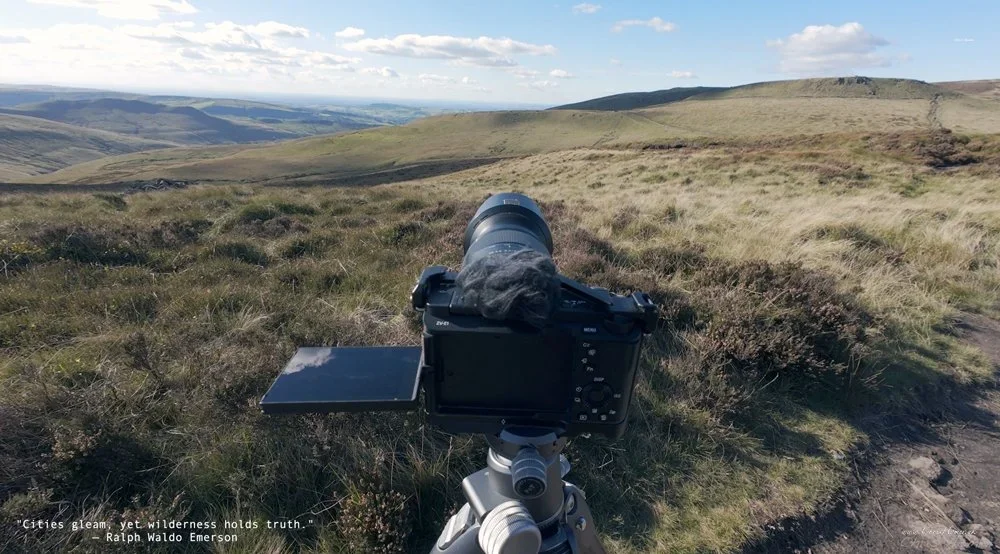
As I neared Swine's Back, the Edale Valley started to open up on one side, offering the perfect foreground rocks and deep valley view I had come for. But then, to the left, I got an amazing, clear view of Manchester City Centre.
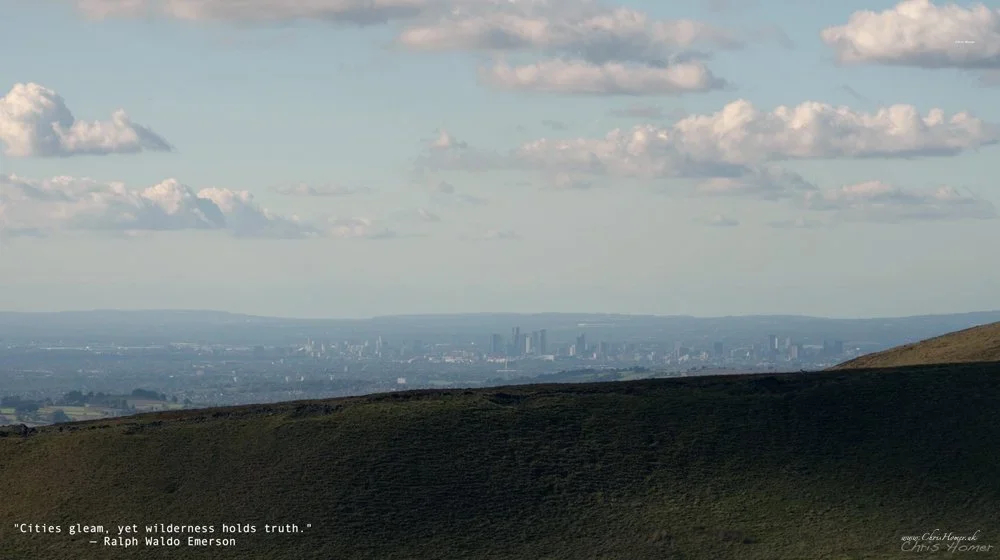
It immediately presented a headache. A view overlooking a city from a wild camp spot is rare, cinematic, and far more commercially valuable for stock footage. However, I hadn't planned for it, and the spot was directly into the strengthening wind. I spent a good half-hour debating the shot.
Ultimately, I stuck to the original plan: Edale.
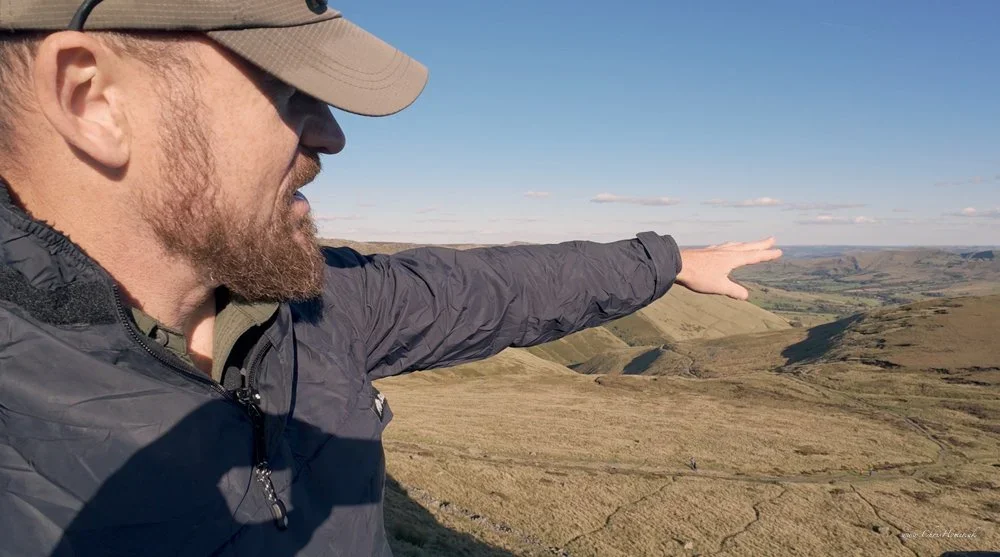
Why? The lenses weren't right. The 20mm was too wide for a good city compression shot, and while I had my 240mm with me, a city shot requires a different lens (like my 50mm f1.4) and zero wind. With a breeze picking up, chasing the Edale shot was the only sensible choice. The Manchester shot will be a future trip (a mission you will see me attempt in my next video!).
Setting the Scene: The Time-Lapse Rig
Having decided on the classic Peak District view over Edale, the setup began. The time-lapse camera, anchored on a rock, was set up for a nine-hour sequence: one shot every 20 seconds, running from sunset right through the night to capture the stars and the pre-dawn glow.
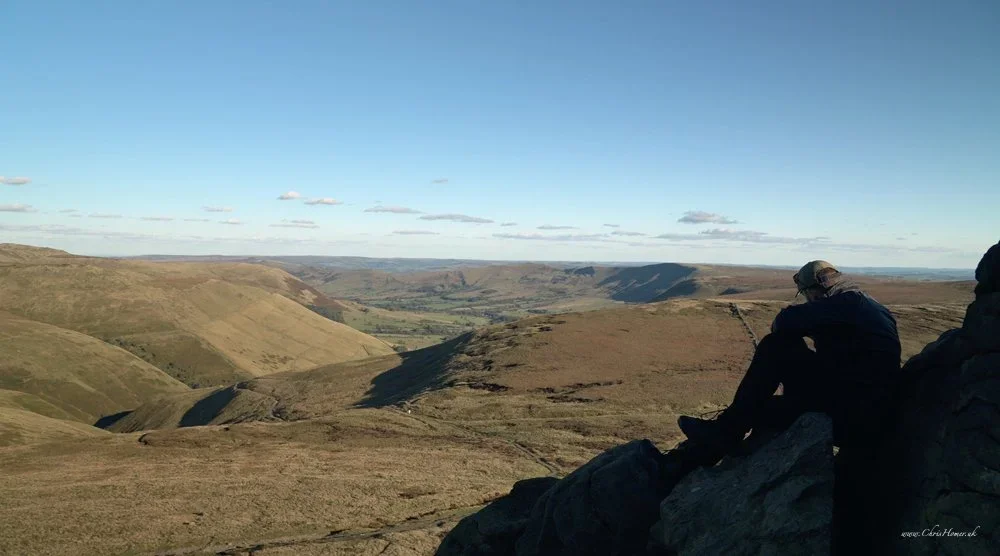
The main challenge in a popular area like this is gear security. Leaving three grand's worth of kit out overnight is always a gamble. I secured the tripod with a big boulder and—just in case—had my movement alarm to clip to the rig. Thankfully, I didn't need to dish out any punishment that night.
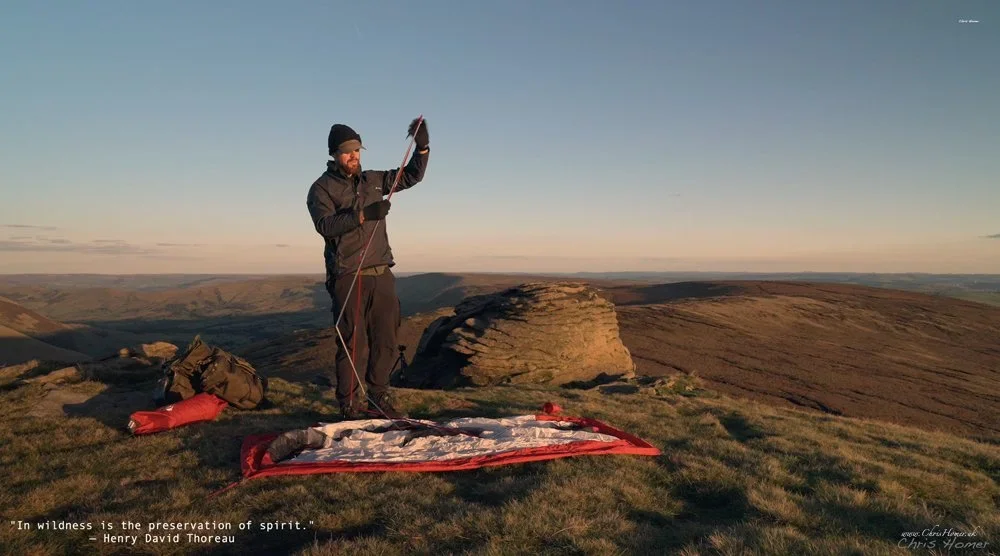
The Cold and The Culinary Delight
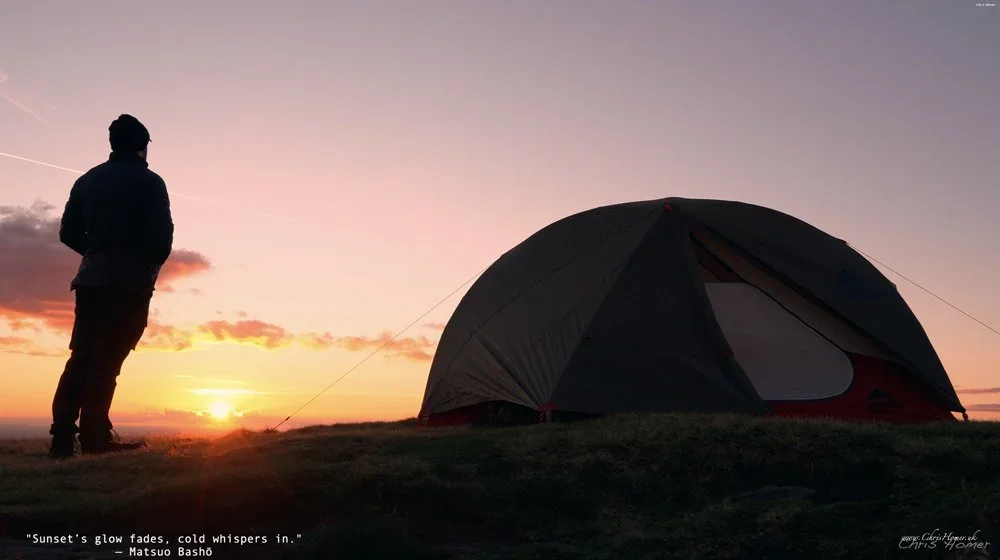
As the beautiful sunset dipped below the horizon (revealing a remarkable 240mm shot looking out toward what I'm almost certain was Liverpool), the temperature plummeted. It hit maybe four or five degrees—a shock to the system after a warm summer. I was grateful to get into the MSR Elixir 1 and get the JetBoil on.
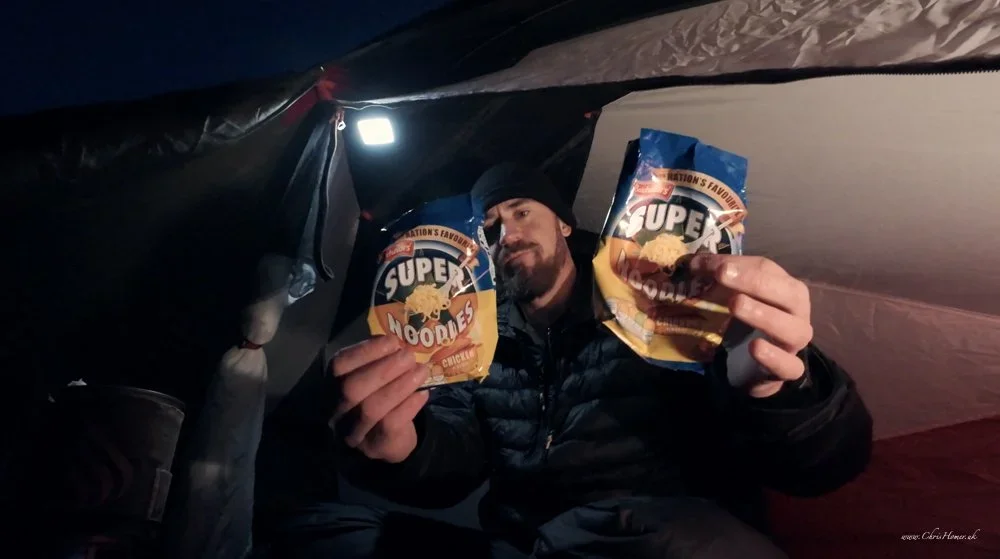
Dinner was a highly anticipated event: noodles and meatballs. A true culinary delight, though I had to switch from my usual Pot Noodle (they've been ignoring my sponsorship requests for seven years, so Super Noodles got to be the star of the show).
The cold was biting, but the time-lapse was running, capturing the first clear stars, and the warmth of the tent was a welcome relief. Knowing I needed a sharp focus and a different aperture for the sunrise light, I planned to bring the camera in around midnight, adjust the focus using the stars, and reset it before dawn at 4 a.m.. This process ensures I have two clean sequences and minimises the risk of a single, all-night mistake.
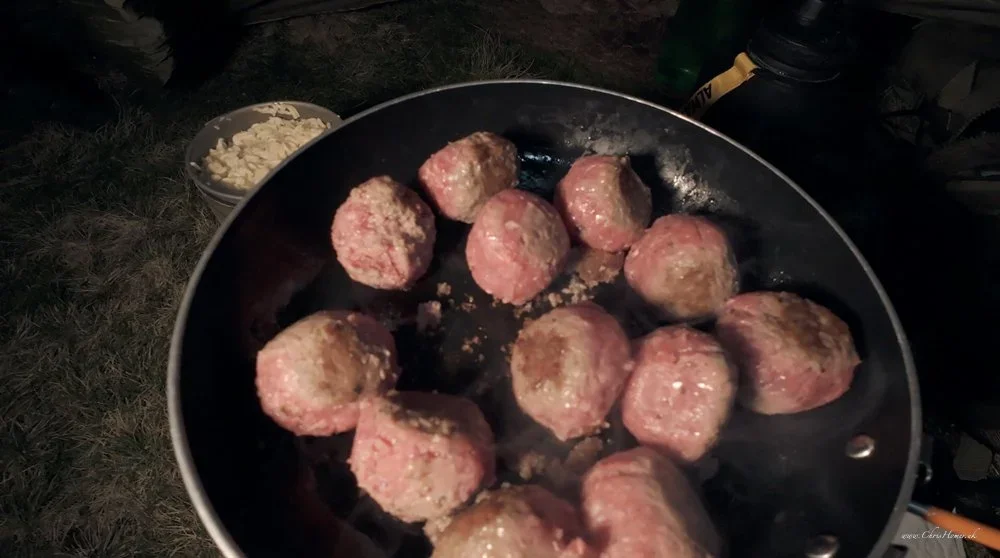
The Sublime Payoff: Sunrise and the Drone View
I woke up expecting a perfect, idyllic sunrise. Nature, as always, had other plans. A thick bank of cloud rolled in and sat directly due east, wiping out the initial clear shot. It was frustrating, but that's mountain photography—you take what you get.
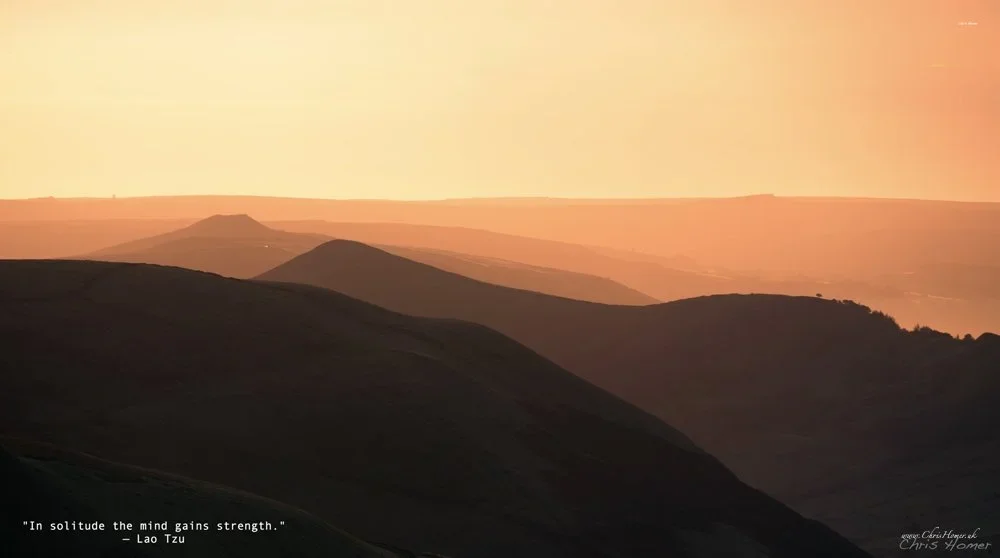
However, the final result was far more rewarding than a clear-sky sunrise. As the sun climbed, it broke through that cloud bank, bathing the Edale Valley in incredible, warm light and generating some truly amazing shots. This is the kind of light you simply cannot fake; it's the reward for the long haul. The high-resolution time-lapse footage from this morning is some of the finest I've ever captured.
The morning also provided a chance to get the drone out. The resulting drone footage, capturing the scale of the valley and the solitude of the camp, is sublime. It gives an unparalleled sense of place that ground footage simply can't match.
Before hiking back to Hayfield, I used the view from the ridge to scout two future locations: Horse Hill Tour and Kinderlow End (the perfect spot for that Manchester city shot I now plan to nail).
Gear List for Cinematic Wild Camping
For those interested in the specifics behind the visuals, here's the core kit I carried on the ascent of Kinder Scout:
MSR Elixir 1 Tent - https://amzn.to/46A6cpB
Bergen - https://amzn.to/427uYw5
Main video camera - https://amzn.to/4pBUfZd
Timelapse camera - https://amzn.to/4mBQ39o
Vlogging Camera - https://amzn.to/4gEZbbJ
Vlogging Mic Lav - https://amzn.to/4nOiUZ3
Drone - https://amzn.to/4gB19de